Blog
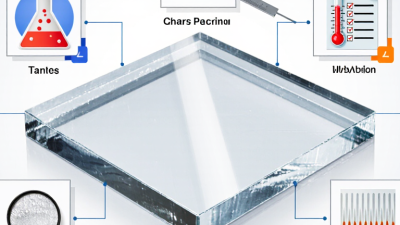
7 Tips for Buying Optical Quartz Glass Plate
Buying an Optical Quartz Glass Plate requires more than comparing prices or browsing polished product photos. This material supports demanding applications, including ultraviolet optics, laboratory instruments, laser systems, and high-temperature assemblies. Small differences in purity, thickness, or surface finish can affect transmission, durability, and measurement accuracy. A plate that looks clear may still perform poorly at a specific wavelength.
This guide presents seven practical tips for making a more reliable purchasing decision. It examines quartz type, optical grade, wavelength range, dimensional tolerance, surface quality, thermal performance, and supplier documentation. Pay close attention to numerical details. Ask whether the stated transmission applies to your operating wavelength, not merely to visible light. Confirm flatness, parallelism, edge treatment, and coating requirements before approving a drawing. These details often determine whether the plate fits correctly and performs consistently.
Experience shows that the cheapest quotation is not always the lowest-cost option. Inconsistent polishing may create scattering. Weak packaging may cause edge chips during delivery. Missing inspection records can create uncertainty later. A reputable supplier should provide clear specifications, traceability, inspection data, and realistic lead times. Still, no checklist is perfect. Application conditions can change, and buyers sometimes overlook mounting stress or cleaning procedures. Careful questions remain essential. With technical verification and a little patience, an Optical Quartz Glass Plate can deliver stable performance instead of expensive surprises.
Read more »
 By:Elowen
- October 22, 2026
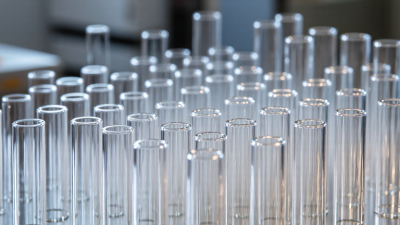
Top 10 Clear Fused Quartz Glass Tube Manufacturers
Choosing a reliable Clear Fused Quartz Glass Tube manufacturer requires more than comparing prices or browsing polished product photographs. This guide introduces ten manufacturers for laboratories, semiconductor equipment, lighting systems, analytical instruments, and high-temperature industrial applications.
A strong supplier should demonstrate consistent silica purity, controlled wall thickness, accurate dimensions, and dependable thermal performance. It should also explain its inspection methods. Ask about hydroxyl content, optical transmission, surface finish, annealing, and tolerance control. These details affect whether a tube survives repeated heating, protects sensitive processes, or maintains stable light transmission.
Dr. James E. Shelby, a respected glass scientist and author, offers a useful principle: “Composition and processing history matter as much as shape.” That idea applies directly to quartz tubing. Two tubes may look identical on a workbench. Their behavior can differ after thermal cycling.
Look for manufacturers with documented production experience, traceable quality systems, and responsive technical support. Certifications help, but they do not replace practical evidence. Request samples. Review inspection reports. Test the tube under realistic conditions.
No ranking is flawless. Buyer requirements change.
Some manufacturers excel at custom fabrication. Others focus on large-volume production, laboratory precision, or specialized optical grades. The best choice depends on temperature, pressure, geometry, purity, and expected service life.
This overview compares those differences carefully. It considers manufacturing capability, product consistency, customization, delivery reliability, and industry reputation. The goal is not to promote the loudest brand. It is to identify suppliers that can support dependable Clear Fused Quartz Glass Tube performance in demanding applications.
Read more »
By:Elowen
- October 22, 2026
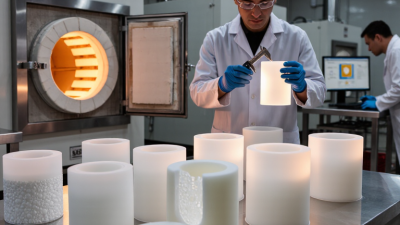
China Top 10 Fused Silica Quartz Crucible Manufacturers
Choosing among China’s top 10 Fused Silica Quartz Crucible manufacturers requires more than comparing catalog prices. A crucible may look flawless under bright warehouse lighting, yet fail after repeated thermal cycling. The real test appears inside a hot zone, where temperatures can exceed 1,400°C and contamination can ruin an entire silicon charge.
Materials scientist Dr. James F. Shackelford has emphasized a useful principle: “Material performance is inseparable from processing history.” This idea fits quartz crucibles closely. Raw silica purity, forming pressure, annealing control, wall uniformity, and inspection records can influence service life. A reliable manufacturer should explain these details clearly, not hide behind broad claims such as “premium quality.”
Small differences matter.
For example, uneven wall thickness may create local stress during heating. Tiny bubbles can expand, while metallic impurities may affect melt quality. Experienced suppliers usually provide dimensional tolerances, purity data, operating guidance, and traceable quality documents. They also understand that one crucible design cannot suit every furnace, charge size, or pulling process.
This ranking should therefore consider more than production capacity. It should examine engineering experience, customer support, customization ability, and consistency across batches. However, no list is perfect. Public information can be incomplete, and factory claims still require independent verification. Buyers should request samples, test reports, and references before making a long-term decision.
The following manufacturers are evaluated through that practical lens. Their strengths may differ, but each deserves attention for its role in China’s evolving high-temperature quartz materials sector.
Read more »
By:Elowen
- October 22, 2026