0%

Choosing among China’s top 10 Fused Silica Quartz Crucible manufacturers requires more than comparing catalog prices. A crucible may look flawless under bright warehouse lighting, yet fail after repeated thermal cycling. The real test appears inside a hot zone, where temperatures can exceed 1,400°C and contamination can ruin an entire silicon charge.

Materials scientist Dr. James F. Shackelford has emphasized a useful principle: “Material performance is inseparable from processing history.” This idea fits quartz crucibles closely. Raw silica purity, forming pressure, annealing control, wall uniformity, and inspection records can influence service life. A reliable manufacturer should explain these details clearly, not hide behind broad claims such as “premium quality.”

Small differences matter.

For example, uneven wall thickness may create local stress during heating. Tiny bubbles can expand, while metallic impurities may affect melt quality. Experienced suppliers usually provide dimensional tolerances, purity data, operating guidance, and traceable quality documents. They also understand that one crucible design cannot suit every furnace, charge size, or pulling process.

This ranking should therefore consider more than production capacity. It should examine engineering experience, customer support, customization ability, and consistency across batches. However, no list is perfect. Public information can be incomplete, and factory claims still require independent verification. Buyers should request samples, test reports, and references before making a long-term decision.

The following manufacturers are evaluated through that practical lens. Their strengths may differ, but each deserves attention for its role in China’s evolving high-temperature quartz materials sector.
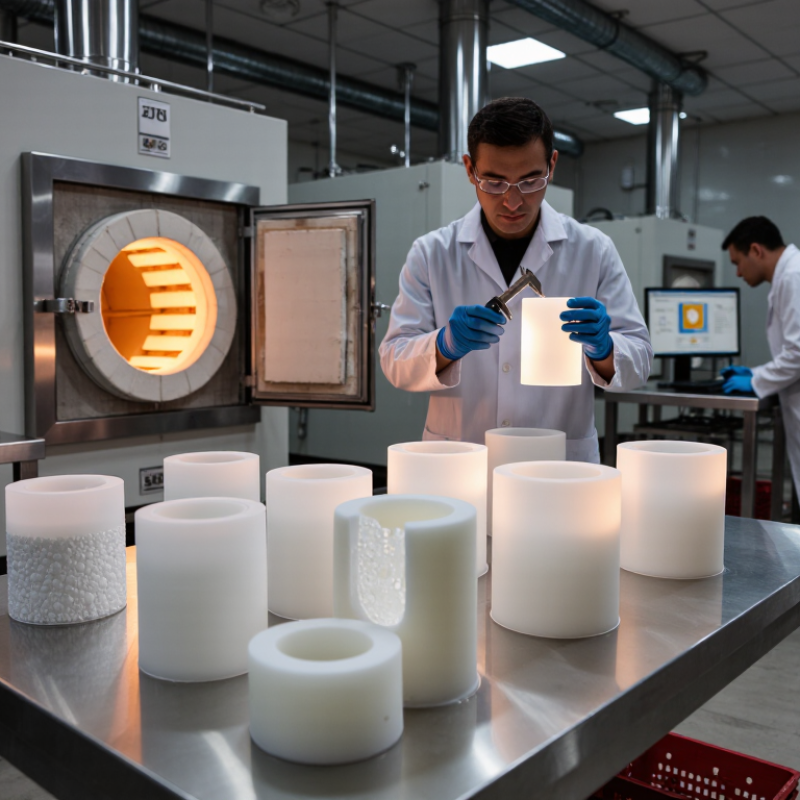
China Top 10 Fused Silica Quartz Crucible Manufacturers

What Are Fused Silica Quartz Crucibles and Why Are They Important?

China Top 10 Fused Silica Quartz Crucible Manufacturers

Fused silica quartz crucibles are high-purity vessels used to melt and grow silicon crystals. They withstand temperatures above 1,700°C and offer low thermal expansion. This stability helps reduce cracking during repeated heating and cooling. In the Czochralski process, the crucible supports molten silicon before it becomes semiconductor or photovoltaic material. It must also resist contamination, because tiny impurities can affect crystal quality and wafer performance.

The IRENA Renewable Capacity Statistics 2024 report recorded 345.5 GW of new solar capacity in 2023. This expansion increases pressure on the silicon supply chain, including crucible quality and consistency. SEMI industry reports also continue to identify wafer manufacturing as a major semiconductor investment area. However, the term “quartz crucible” is sometimes used too loosely. Purity, bubble control, wall thickness, and surface condition require separate evaluation. A low defect rate is not enough if thermal behavior varies between production batches.

Tips: Check the crucible’s purity data, dimensional tolerance, and inspection method. Ask for traceable test records. Examine the inner surface closely; rough areas may encourage contamination. In practice, even a well-designed crucible can fail when furnace temperature changes too sharply. That detail is easy to underestimate.

How China’s Fused Silica Quartz Crucible Industry Has Developed

China’s fused-silica quartz crucible industry grew alongside photovoltaic and semiconductor expansion. The IEA PVPS Trends 2024 report recorded 456 GW of new global photovoltaic capacity in 2023. China installed about 216.9 GW, creating strong demand for large-diameter crucibles used in silicon ingot growth. This demand changed local production from basic glass processing to controlled high-purity manufacturing.

Producers now focus on synthetic silica content, hydroxyl levels, bubble density, and wall uniformity. These details directly affect molten silicon stability and crucible service life. In production workshops, technicians inspect translucent walls under bright lamps. Small bubbles can become visible failure points during repeated thermal cycling. Vacuum forming, electric arc melting, and cleaner handling have improved consistency. However, quality still varies between batches. Price competition can encourage thinner walls, which may reduce safety margins.

The USGS Mineral Commodity Summaries 2024 does not publish a separate global crucible market series. That limitation matters. Many market estimates combine quartzware, semiconductor materials, and photovoltaic components. A careful buyer should therefore verify test data, not rely on market rankings alone. Useful records include impurity analysis, hydroxyl measurements, dimensional tolerances, and batch traceability. China’s manufacturing base is now deeper, but advanced crucible production remains a process-control challenge rather than a simple capacity race.

What Defines the Top 10 Chinese Crucible Manufacturers?

What Defines the Top 10 Chinese Crucible Manufacturers?

The top 10 Chinese fused silica quartz crucible manufacturers are not ranked by factory size alone. They are judged by purity, dimensional control, thermal stability, and repeatable production. The China Photovoltaic Industry Association reported 277.17 GW of new solar capacity in China during 2024. This scale creates demanding conditions for crucible suppliers. A qualified manufacturer should show low metallic contamination, stable wall thickness, controlled bubble levels, and reliable performance during repeated high-temperature cycles.

Data matters. SEMI’s 2024 World Fab Forecast identifies China as the world’s largest regional semiconductor manufacturing base. Therefore, advanced crucible producers need cleanroom discipline, batch traceability, and documented inspection methods. Top suppliers usually provide particle analysis, hydrostatic testing, visual records, and furnace-use feedback. They also measure crucible deformation after service, not only before shipment. That detail reveals practical experience.

Some rankings remain imperfect. Public capacity figures can be difficult to verify. Customer lists may also hide important differences in quality control. A stronger evaluation compares yield loss, replacement intervals, emergency response, and certification records. Short lead times help. Consistent delivery helps more. The best manufacturers combine quartz material expertise with process data, worker training, and honest reporting when a batch needs improvement.

How to Compare Product Quality, Technology, and Manufacturing Capacity

When comparing China’s top fused silica quartz crucible manufacturers, product quality starts with measurable evidence, not polished photographs. Check silica purity, hydroxyl content, bubble levels, inclusions, wall thickness, and dimensional tolerance. These details affect contamination risk and thermal stability during high-temperature crystal growth. Ask for batch-specific inspection reports, material traceability, and thermal cycling data. A clear rejection standard matters more than impressive marketing language.

Technology also deserves close review. Manufacturers may use different forming, melting, annealing, and machining methods. Compare how each process controls residual stress and surface defects. Inspect the inner wall under strong light. Small pits or uneven areas can become failure points. Request sample testing under conditions similar to your furnace. Laboratory results are useful, but they do not always predict production performance. That is an uncomfortable limitation.

Manufacturing capacity involves more than factory size. Examine furnace availability, production planning, quality personnel, and monthly output for your required specifications. Stable capacity should support repeat orders without changing dimensions or purity. Ask about lead times, emergency replacement procedures, and lot-to-lot consistency. An on-site audit or video inspection can reveal practical weaknesses. Some suppliers may offer lower prices, yet their documentation remains incomplete. That should prompt careful review, not an immediate rejection. A balanced evaluation combines technical proof, production records, sample performance, and honest communication.

What Applications and Purchasing Factors Shape Manufacturer Selection?

Selecting among China’s top 10 fused silica quartz crucible manufacturers depends on application, not popularity alone. Semiconductor melting demands extremely low metallic contamination and stable dimensions. Photovoltaic production often prioritizes thermal cycling, consistent wall thickness, and controlled bubble levels. Laboratory users may need smaller crucibles, precise tolerances, and clear documentation. Each application stresses quartz differently.

Purchasing teams should review raw material purity, forming technology, annealing control, and inspection records. Ask for test data covering devitrification, surface defects, and thermal shock performance. Confirm diameter, height, wall thickness, and furnace compatibility before ordering. Batch traceability also matters when failures could interrupt production. A low quotation may look attractive, yet short service life can increase the real cost. Delivery capacity deserves attention too. Large orders need stable output, not only a strong sample.

Tips: Request samples from several qualified manufacturers. Test them under your actual temperature cycle. Compare weight loss, cracking, distortion, and cleaning results. Check how defects are handled after delivery. Do not judge quality from appearance alone. A bright surface can still hide internal stress. No checklist is perfect. Reviewing results with furnace operators may reveal practical issues that purchasing teams miss. In some cases, paying more for tighter control is sensible; in others, it is unnecessary. That judgment should come from measured performance, not assumptions.

China Top 10 Fused Silica Quartz Crucible Manufacturers - What Applications and Purchasing Factors Shape Manufacturer Selection?

Comparative market-selection matrix based on commonly specified fused-silica crucible characteristics and purchasing criteria

Profile Typical Material Specification Forming Technology Primary Application Common Size Range Thermal Service Profile Key Quality Evidence Main Purchasing Factors
Manufacturer Profile 01 High-purity fused silica; low alkali and metallic contamination; transparent or opaque grades available Electric arc fusion with CNC finishing Monocrystalline silicon growth and photovoltaic ingot production 250–32,000 mm diameter; custom wall thickness Repeated use at approximately 1,400–1,600°C, subject to process atmosphere and loading Chemical analysis, dimensional inspection, visual defect control, batch traceability Purity, thermal-shock resistance, usable life, dimensional consistency, export packing
Manufacturer Profile 02 Opaque fused silica with controlled bubble content and high resistance to devitrification Arc melting followed by precision grinding and polishing Large-scale semiconductor and solar crystal pulling 16–32 inch class crucibles; engineered geometries available Long-duration high-temperature service with controlled thermal cycling Bubble and inclusion inspection, roundness measurement, wall-thickness mapping Large-size stability, low defect density, lifetime per pull, inspection capability
Manufacturer Profile 03 Transparent fused silica optimized for laboratory purity and optical cleanliness Precision forming with clean-room finishing options Research furnaces, material testing, and semiconductor laboratory processes 50–1,000 mm diameter; prototype and small-batch sizes High-temperature batch processing and repeated laboratory heating cycles Cleanliness statement, surface-finish report, dimensional report, sample approval Small-order flexibility, surface quality, lead time, contamination control, customization
Manufacturer Profile 04 High-purity grade with emphasis on low OH content for demanding thermal applications Electric fusion and controlled annealing High-temperature laboratory ware and specialty glass processing 100–1,500 mm diameter; custom lids and support features Low thermal expansion and resistance to rapid temperature changes OH-content data where specified, annealing records, visual and dimensional checks OH level, thermal-shock performance, geometry, packaging, technical support
Manufacturer Profile 05 Opaque fused silica designed for resistance to chemical attack and surface crystallization Arc fusion with automated profiling and edge finishing Industrial furnace service, melting trials, and specialty material synthesis 200–2,000 mm diameter; shallow and deep bowl designs Intermittent high-temperature use with abrasive or reactive charge materials Chemical compatibility information, crack inspection, profile measurement Chemical resistance, wall durability, charge compatibility, repair or replacement cost
Manufacturer Profile 06 Solar-grade fused silica with controlled impurity profile and repeatable batch performance Automated fusion, machining, cleaning, and inspection Photovoltaic silicon ingot and wafer manufacturing 18–32 inch class; production quantities available Extended production cycles where contamination and crucible life affect yield Lot traceability, impurity report, inspection records, production consistency data Cost per usable pull, yield impact, supply capacity, delivery reliability, consistency
Manufacturer Profile 07 High-purity quartz with custom impurity limits specified by the end user Fused forming with bespoke machining and inspection R&D equipment, pilot production, and custom thermal-processing systems 30–2,500 mm diameter; non-standard shapes supported Application-specific heating, cooling, and atmospheric conditions Approved drawings, first-article inspection, material certificate, change control Engineering capability, minimum order quantity, prototype cost, communication speed
Manufacturer Profile 08 Transparent or translucent fused silica with tightly controlled surface roughness CNC grinding, polishing, cleaning, and visual inspection Optoelectronic, analytical, and precision laboratory equipment 20–800 mm diameter; thin-wall and precision-feature options Thermal cycling where surface defects may initiate cracking Surface roughness data, cleanliness controls, dimensional tolerances, packaging validation Surface finish, tolerance, cleanliness, cosmetic acceptance criteria, protective packaging
Manufacturer Profile 09 Industrial fused silica with balanced purity, durability, and cost performance Standardized fusion and batch-based machining General furnace operations, ceramics, metallurgy, and chemical processing 100–1,800 mm diameter; standard and semi-custom designs Moderate-to-heavy industrial use with periodic replacement requirements Incoming-material records, dimensional inspection, visual inspection, packing checklist Total cost of ownership, availability, standard sizes, replacement speed, payment terms
Manufacturer Profile 10 Application-engineered fused silica with specified dimensions, purity, and surface condition Integrated forming, machining, cleaning, and final quality inspection Semiconductor, photovoltaic, laboratory, and specialty thermal-processing applications 20–3,000 mm diameter; custom drawings and repeated production possible Service profile defined by temperature, atmosphere, load, and thermal-cycle frequency Quality plan, material certificate, process traceability, sample validation, corrective-action process Technical fit, supplier qualification, quality system, scalability, logistics, after-sales response

Note: Size ranges, temperature profiles, and quality requirements are representative industry specifications. Final selection should be confirmed against the purchaser’s drawing, charge material, furnace atmosphere, thermal cycle, impurity limits, and qualification procedure.

FAQS

What is a fused silica quartz crucible?

It is a high-purity vessel for melting and growing silicon crystals. It withstands temperatures above 1,700°C. Low thermal expansion helps reduce cracking during heating and cooling.

Why is crucible purity important?

Tiny metallic impurities can enter molten silicon. They may reduce crystal quality and affect wafer performance. Purity data should be checked, not simply assumed.

Which properties should buyers evaluate?

Review silica purity, hydroxyl levels, bubble density, wall thickness, and dimensional tolerance. Surface condition also matters. Rough inner areas may encourage contamination.

How do bubbles affect crucible performance?

Small bubbles can become weak points during repeated thermal cycling. Inspect translucent walls under strong lighting. Bubble control is important, but it is not the only concern.

Why does wall thickness matter?

Uniform walls support stable heating and mechanical strength. Thinner sections may reduce safety margins. Price competition can sometimes encourage thinner designs.

How should manufacturers be compared?

Compare inspection methods, batch traceability, impurity analysis, and service records. Also review deformation after furnace use. Factory size alone proves little.

What records should a reliable supplier provide?

Request traceable test records, dimensional measurements, particle analysis, and visual inspection results. Furnace-use feedback is useful. Public claims may still be difficult to verify.

Can a high-quality crucible still fail?

Yes. Sharp furnace temperature changes can cause failure, even with good materials. This detail is easy to underestimate. Thermal control matters greatly.

Why are consistent batches important?

Crucible behavior can vary between production batches. Stable wall thickness and bubble levels support predictable silicon growth. A low defect rate alone may not be enough.

What is an honest limitation when reviewing market rankings?

Public capacity figures and customer lists may not show real quality differences. Market estimates can combine several product categories. Buyers should verify technical evidence independently.

Conclusion

A Fused Silica Quartz Crucible is a high-purity container designed to withstand extreme temperatures, chemical stress, and demanding production conditions. Its low impurity levels, excellent thermal stability, and resistance to thermal shock make it essential in industries such as semiconductor manufacturing, photovoltaic processing, laboratory research, and advanced materials production. As China’s industrial capabilities have expanded, its fused silica quartz crucible sector has developed through improvements in raw material purification, forming techniques, quality control, and large-scale manufacturing.

This article examines the qualities that distinguish leading Chinese manufacturers, including product consistency, technical expertise, production capacity, inspection systems, and customized service. It also explains how buyers can compare crucible purity, dimensional accuracy, surface quality, durability, delivery reliability, and cost-effectiveness. Different applications may require specific designs, wall thicknesses, temperature performance, or contamination-control standards, so manufacturer selection should be based on both technical requirements and long-term supply capabilities.
Elowen

Elowen

Elowen is a skilled marketing professional and a trusted voice behind the company’s expert blog. With a strong understanding of the company’s products, services, and customer needs, Elowen transforms complex information into clear, practical, and engaging content that helps readers make confident......