Choosing a reliable Clear Fused Quartz Glass Tube manufacturer requires more than comparing prices or browsing polished product photographs. This guide introduces ten manufacturers for laboratories, semiconductor equipment, lighting systems, analytical instruments, and high-temperature industrial applications.
A strong supplier should demonstrate consistent silica purity, controlled wall thickness, accurate dimensions, and dependable thermal performance. It should also explain its inspection methods. Ask about hydroxyl content, optical transmission, surface finish, annealing, and tolerance control. These details affect whether a tube survives repeated heating, protects sensitive processes, or maintains stable light transmission.
Dr. James E. Shelby, a respected glass scientist and author, offers a useful principle: “Composition and processing history matter as much as shape.” That idea applies directly to quartz tubing. Two tubes may look identical on a workbench. Their behavior can differ after thermal cycling.
Look for manufacturers with documented production experience, traceable quality systems, and responsive technical support. Certifications help, but they do not replace practical evidence. Request samples. Review inspection reports. Test the tube under realistic conditions.
No ranking is flawless. Buyer requirements change.
Some manufacturers excel at custom fabrication. Others focus on large-volume production, laboratory precision, or specialized optical grades. The best choice depends on temperature, pressure, geometry, purity, and expected service life.
This overview compares those differences carefully. It considers manufacturing capability, product consistency, customization, delivery reliability, and industry reputation. The goal is not to promote the loudest brand. It is to identify suppliers that can support dependable Clear Fused Quartz Glass Tube performance in demanding applications.
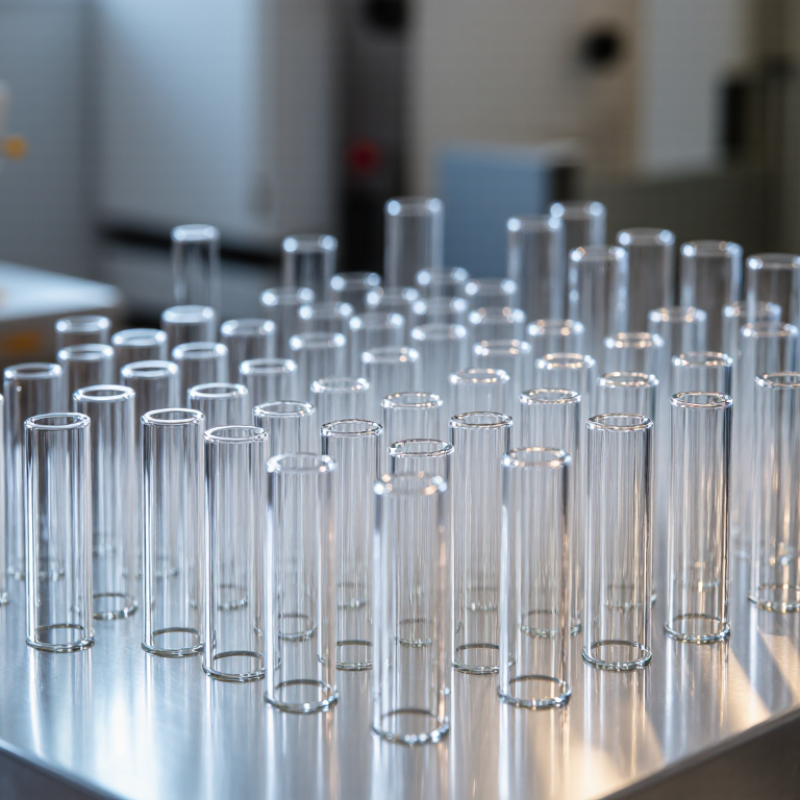
Clear Fused Quartz Glass Tubes: Definition and Key Properties
Top 10 Clear Fused Quartz Glass Tube Manufacturers
Clear fused quartz glass tubes are transparent, amorphous silica components made for demanding thermal and chemical environments. Their SiO₂ content commonly exceeds 99.9%, supporting excellent purity and stable performance. They tolerate rapid temperature changes better than ordinary glass. Their thermal expansion is extremely low, near 0.55 × 10⁻⁶/K. This reduces cracking during heating and cooling cycles.
These tubes also resist many acids, solvents, and molten materials. They transmit ultraviolet and visible light effectively, which suits laboratory lamps, optical systems, and semiconductor processing equipment. However, performance depends on wall thickness, hydroxyl content, surface finish, and manufacturing control. Tiny bubbles, striae, or rough edges can affect optical clarity and service life. No material is perfect. I have seen specifications look impressive while dimensional tolerances remain unclear. Reliable manufacturers should provide inspection data, chemical composition, thermal limits, and traceable batch information.
Tips: Check the actual inner and outer diameters before ordering. Measure length, wall thickness, and end condition. Ask whether the tube is flame-polished, mechanically polished, or simply cut. For repeated heating, test a sample under the real temperature cycle. Also review visible defects under strong side lighting. A clear tube should look clean, but “clear” alone does not guarantee suitable purity or durability.
| Rank | Anonymous Manufacturer Profile | Typical Quartz Purity | Typical Outside Diameter Range | Typical Wall Thickness | Maximum Continuous Service Temperature | Softening Point | Coefficient of Thermal Expansion | Optical Transmission | Common Applications |
|---|---|---|---|---|---|---|---|---|---|
| 1 | Profile A — High-Purity Tubing Specialist | SiO₂ ≥ 99.99% | 3–300 mm | 0.5–10 mm | Approximately 1,100°C | Approximately 1,680°C | Approximately 0.55 × 10⁻⁶/K | High UV, visible, and near-infrared transmission | Semiconductor processing, laboratory equipment, UV systems |
| 2 | Profile B — Large-Diameter Tube Producer | SiO₂ ≥ 99.95% | 50–500 mm | 2–20 mm | Approximately 1,000–1,100°C | Approximately 1,680°C | Approximately 0.55 × 10⁻⁶/K | Strong visible and near-infrared transmission | Industrial furnaces, thermal processing, inspection windows |
| 3 | Profile C — Precision Thin-Wall Manufacturer | SiO₂ ≥ 99.99% | 1–80 mm | 0.2–2 mm | Approximately 1,000°C | Approximately 1,680°C | Approximately 0.55 × 10⁻⁶/K | Excellent UV-to-near-infrared transmission | Analytical instruments, capillary systems, optical assemblies |
| 4 | Profile D — Industrial Furnace Tube Supplier | SiO₂ ≥ 99.95% | 10–250 mm | 1–12 mm | Approximately 1,100°C | Approximately 1,680°C | Approximately 0.55 × 10⁻⁶/K | High visible and infrared transmission | Heating elements, furnace liners, thermal treatment equipment |
| 5 | Profile E — UV-Grade Quartz Tube Manufacturer | SiO₂ ≥ 99.99% | 5–150 mm | 0.8–8 mm | Approximately 1,000–1,100°C | Approximately 1,680°C | Approximately 0.55 × 10⁻⁶/K | High transmission below 300 nm, subject to grade | UV sterilization, photochemistry, spectroscopy, water treatment |
| 6 | Profile F — Semiconductor-Grade Tube Supplier | SiO₂ ≥ 99.99%; low metallic contamination grades available | 20–450 mm | 1.5–18 mm | Approximately 1,100°C | Approximately 1,680°C | Approximately 0.55 × 10⁻⁶/K | High UV, visible, and near-infrared transmission | Wafer processing, diffusion furnaces, oxidation systems |
| 7 | Profile G — Custom Fabrication Specialist | SiO₂ ≥ 99.95–99.99% | 2–350 mm | 0.5–15 mm | Approximately 1,000–1,100°C | Approximately 1,680°C | Approximately 0.55 × 10⁻⁶/K | High transmission across the specified wavelength range | Custom reactors, sight tubes, research apparatus, sampling systems |
| 8 | Profile H — Laboratory and Process-Tube Producer | SiO₂ ≥ 99.95% | 3–200 mm | 0.5–10 mm | Approximately 1,000°C | Approximately 1,680°C | Approximately 0.55 × 10⁻⁶/K | Good visible and near-infrared transmission | Laboratory reactors, sample holders, gas-flow systems |
| 9 | Profile I — High-Temperature Protective Tube Supplier | SiO₂ ≥ 99.95% | 8–180 mm | 1–10 mm | Approximately 1,100°C | Approximately 1,680°C | Approximately 0.55 × 10⁻⁶/K | High visible and infrared transmission | Thermocouple protection, furnace sensing, heating assemblies |
| 10 | Profile J — Standard Clear Quartz Tube Manufacturer | SiO₂ ≥ 99.95% | 5–250 mm | 0.8–12 mm | Approximately 1,000–1,100°C | Approximately 1,680°C | Approximately 0.55 × 10⁻⁶/K | Good UV, visible, and near-infrared transmission | Lighting, laboratory glassware, industrial heating, fluid handling |
| Key properties of clear fused quartz include very high silica content, low thermal expansion, excellent thermal-shock resistance, high softening temperature, strong chemical durability, and broad optical transmission. Actual dimensional tolerances, purity, transmission, and temperature ratings should be confirmed against the manufacturer’s technical datasheet. | |||||||||
FAQS
It is a transparent silica tube with commonly more than 99.9% SiO₂. Its structure is amorphous, not crystalline.
Its thermal expansion is extremely low, near 0.55 × 10⁻⁶/K. This helps reduce cracking during heating and cooling.
They suit laboratory systems, furnace components, ultraviolet equipment, optical systems, and semiconductor processing equipment.
They resist many acids, solvents, and molten materials. Resistance still depends on temperature, exposure time, and chemical conditions.
Wall thickness, hydroxyl content, surface finish, and manufacturing control all matter. Tiny bubbles, striae, or rough edges can reduce performance.
Check inner diameter, outer diameter, length, wall thickness, straightness, and end condition. Small errors can affect sealing and heat distribution.
Some suppliers offer CNC cutting, grinding, flame polishing, drilling, and flaring. Others provide only cut lengths. Details matter.
Request sample tubes, dimensional reports, inspection methods, chemical data, thermal limits, and traceable batch information. Test a sample.
No. Inspect the tube under strong side lighting for particles, bubbles, striae, and rough edges. “Clear” does not guarantee purity or durability.
Factories may measure tolerances differently, even when specifications look similar. Vague drawings can cause missed requirements. I would still recheck everything.
Conclusion
Clear Fused Quartz Glass Tube is a high-purity component valued for its excellent light transmission, thermal resistance, chemical stability, low thermal expansion, and reliable performance in demanding industrial and laboratory environments. This article explains the material’s definition and key properties, then introduces practical criteria for evaluating leading manufacturers, including raw material quality, production technology, dimensional precision, surface finish, customization capability, quality control, delivery reliability, and technical support.
The overview compares the product capabilities and manufacturing differences commonly found among the top ten suppliers, such as tube size ranges, wall thickness options, transparency levels, forming methods, and application-specific designs. It also provides guidance for selecting the right supplier by matching technical requirements, operating conditions, quality expectations, certifications, order volume, budget, and after-sales service. The goal is to help buyers make a clear, informed decision and choose a dependable Clear Fused Quartz Glass Tube supplier for consistent performance and long-term use.