High-Purity Quartz & Optical Substrates
Engineered for high-temperature stability, deep-UV to far-IR spectral transmittance, and severe chemical inertness. Sliced, grounded, and polished to exact technical drawings.
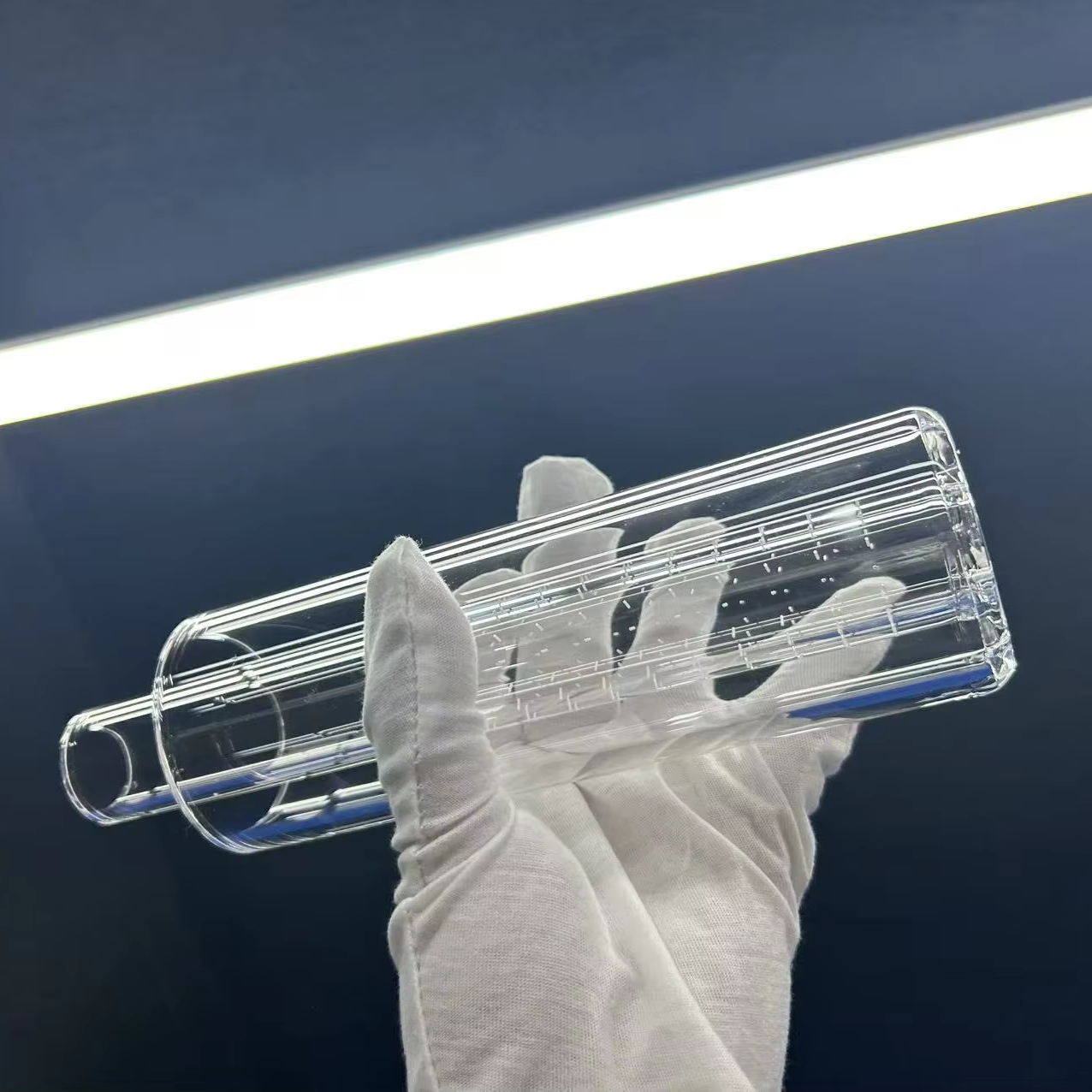
Customized Perforated Quartz Tube
View Specifications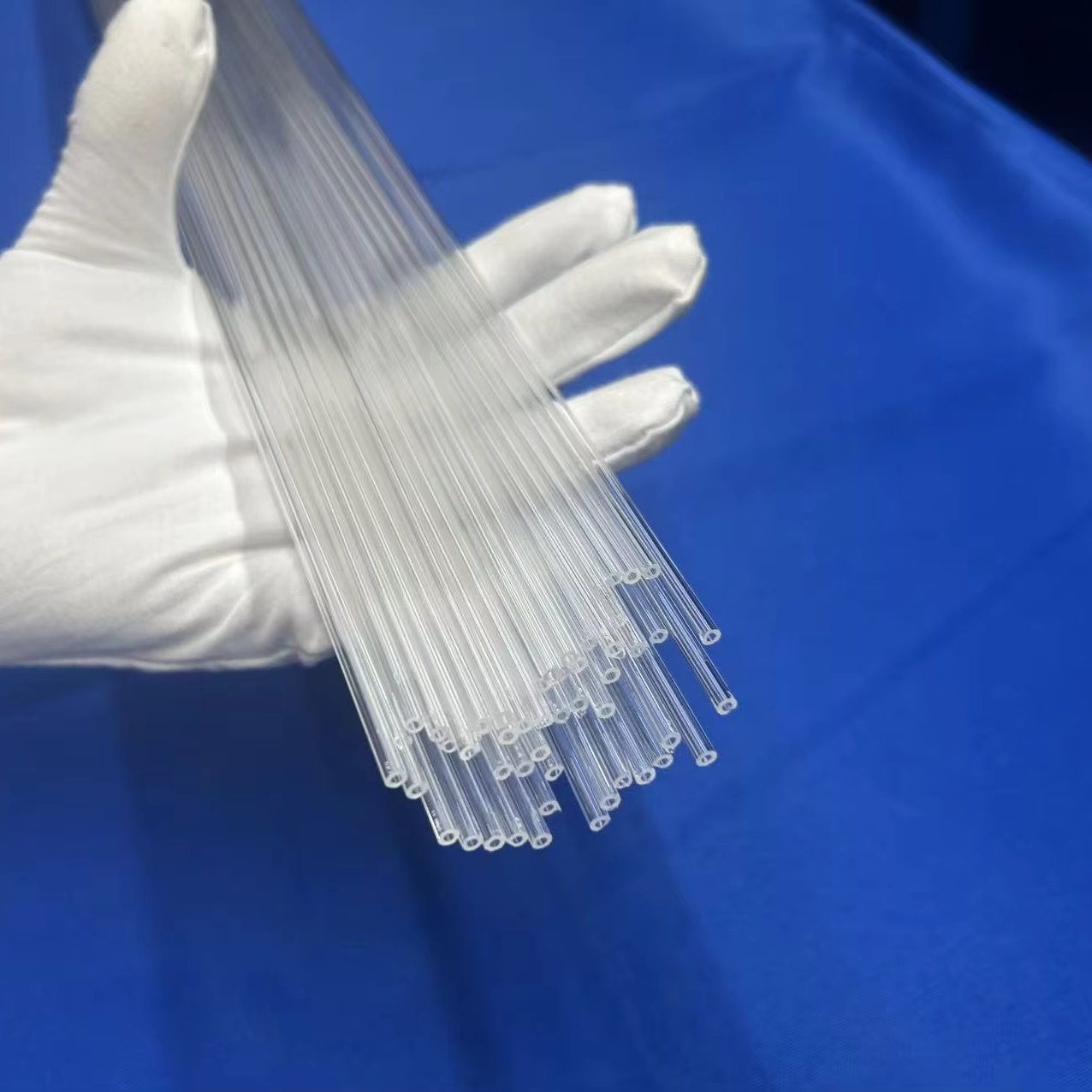
Capillary Quartz Tube
View Specifications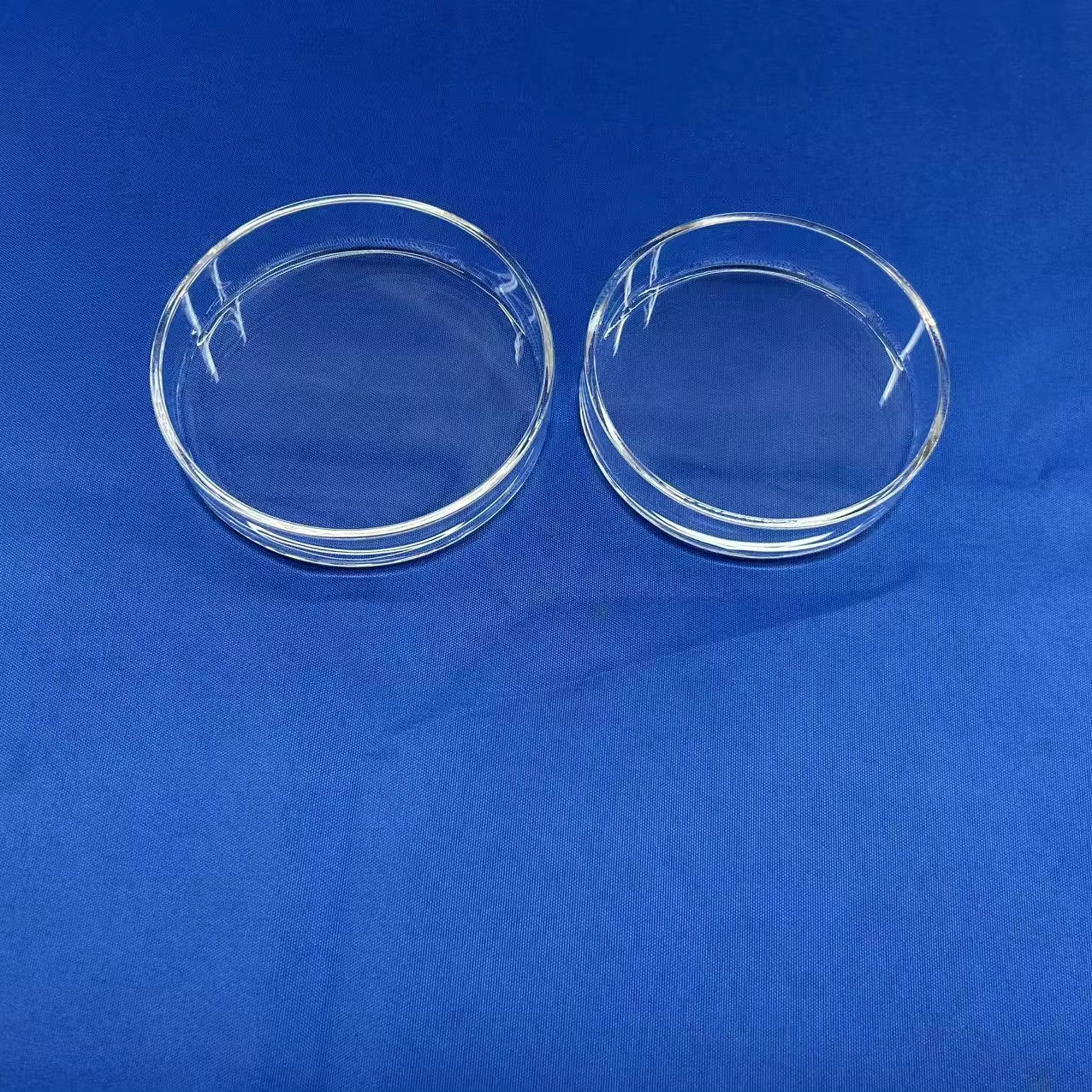
High-Purity Quartz Glass Petri Dishes with Lids
View Specifications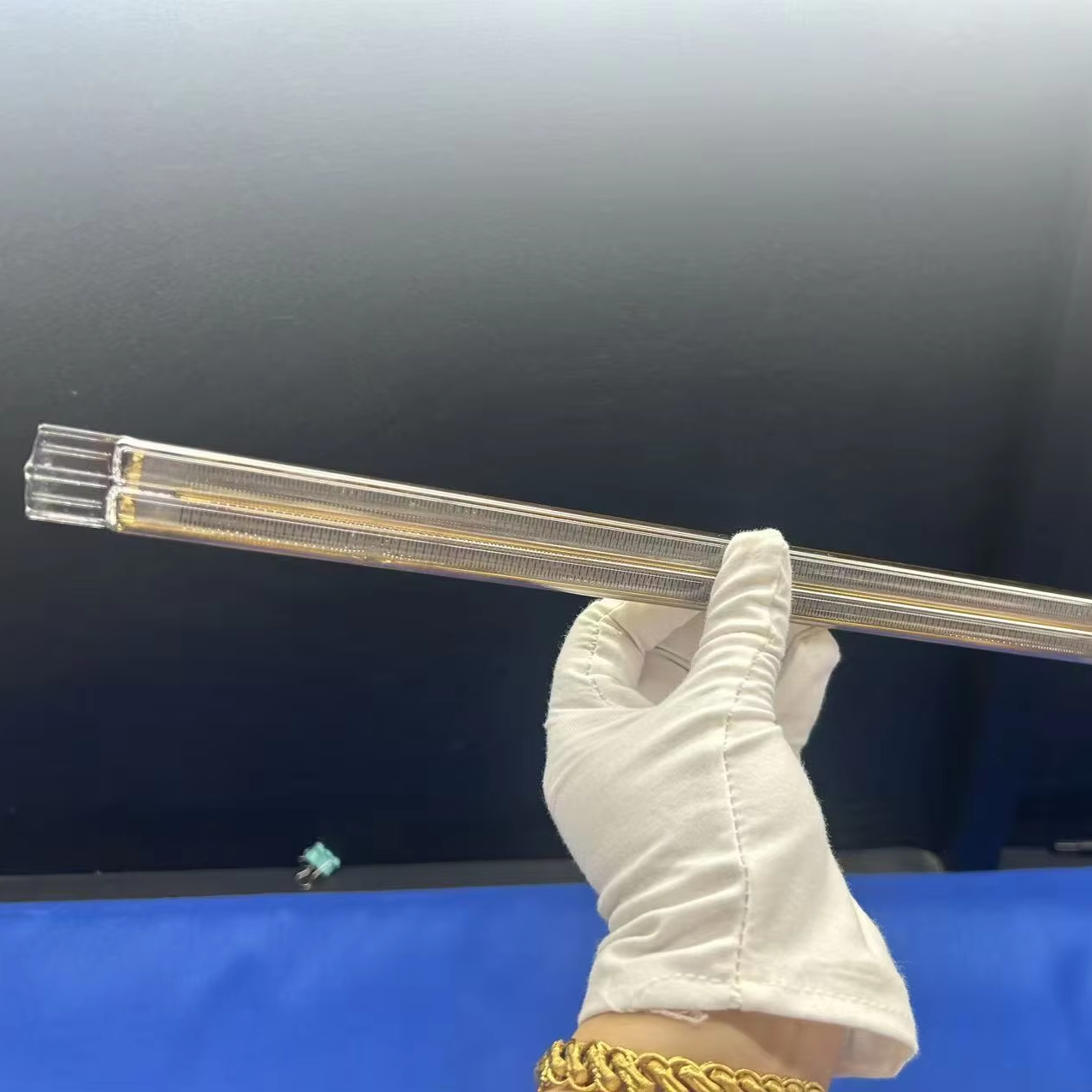
Graphene Quartz Heating Tube
View Specifications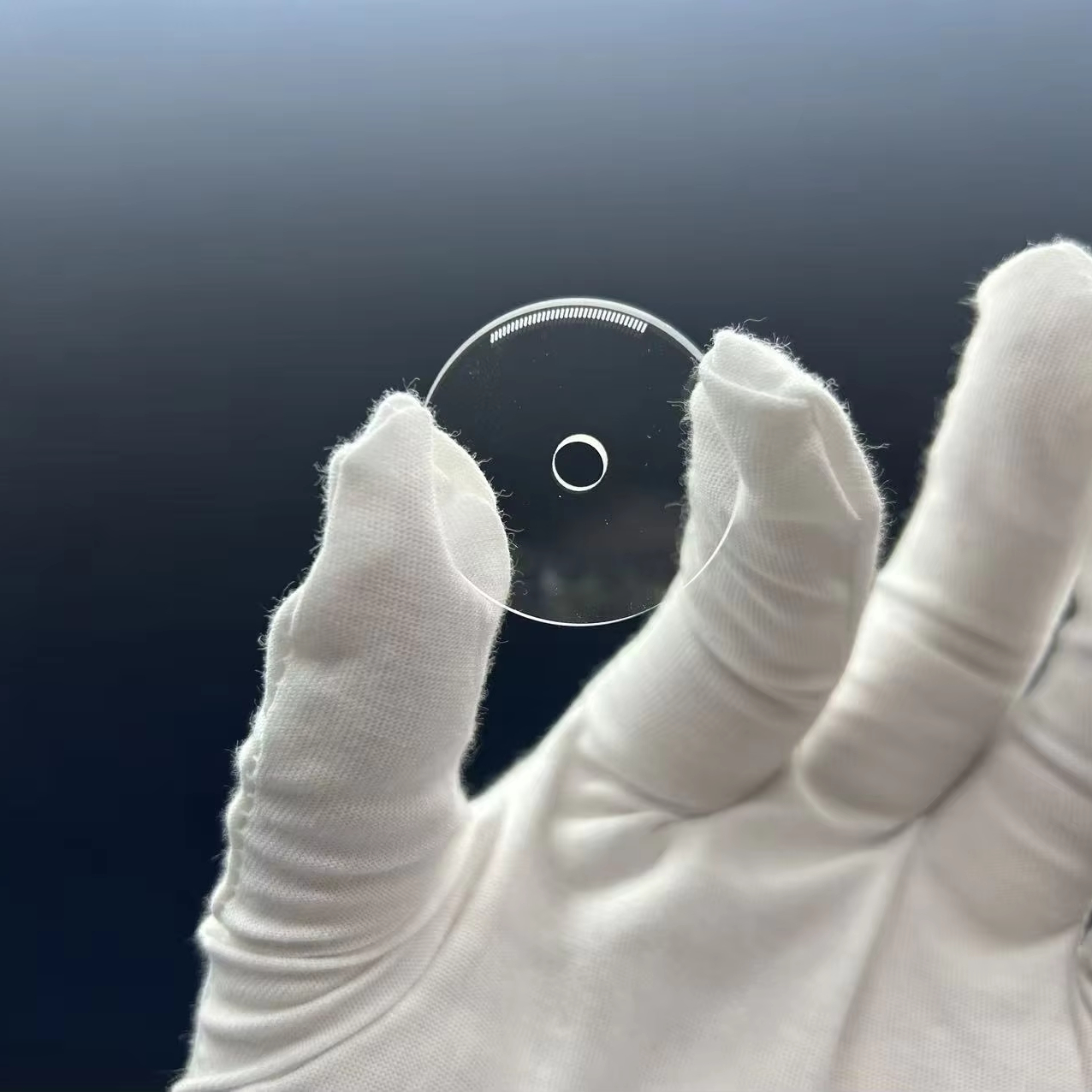
Frosted Quartz Sheet
View Specifications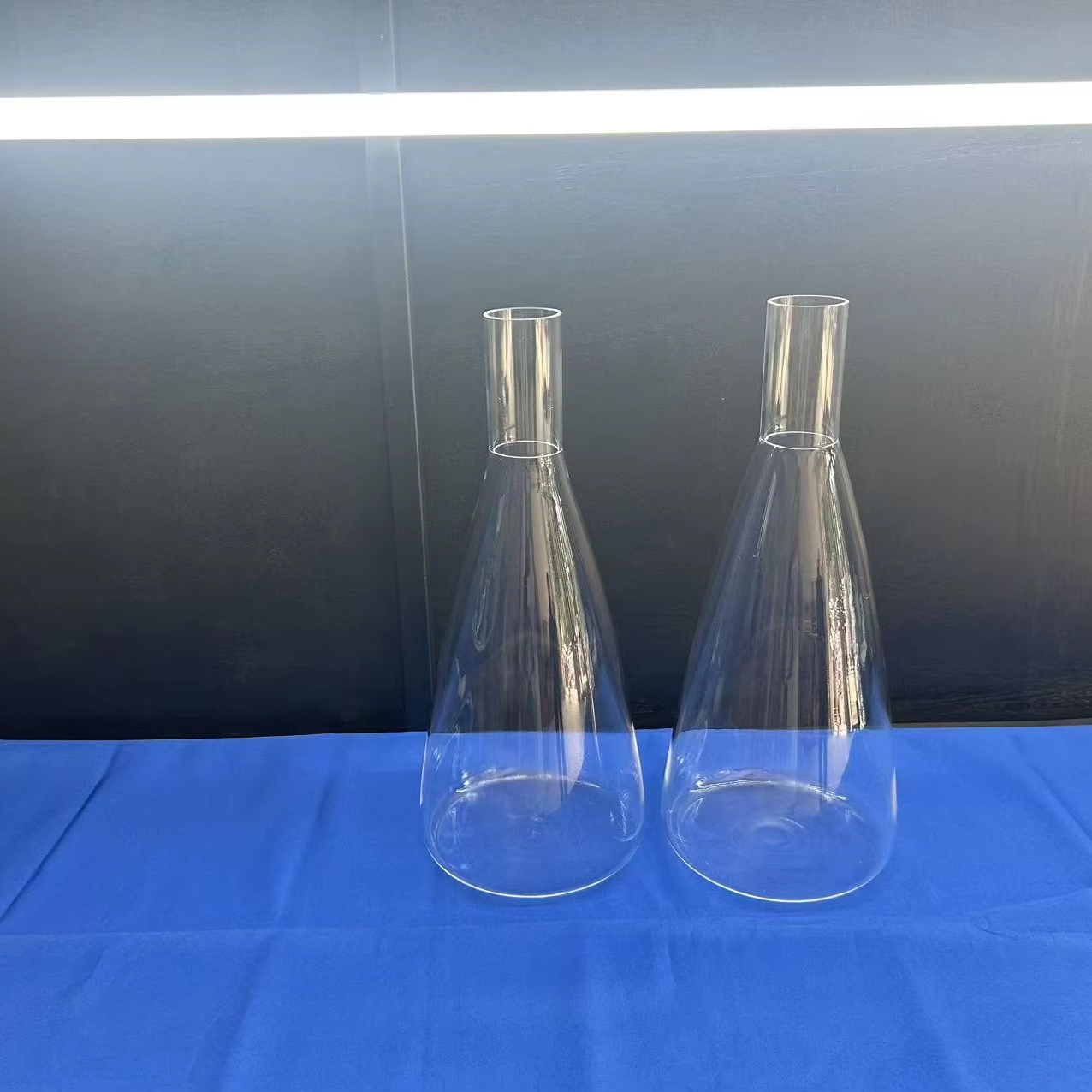
Laboratory Fused Silica Quartz Glass Flask
View Specifications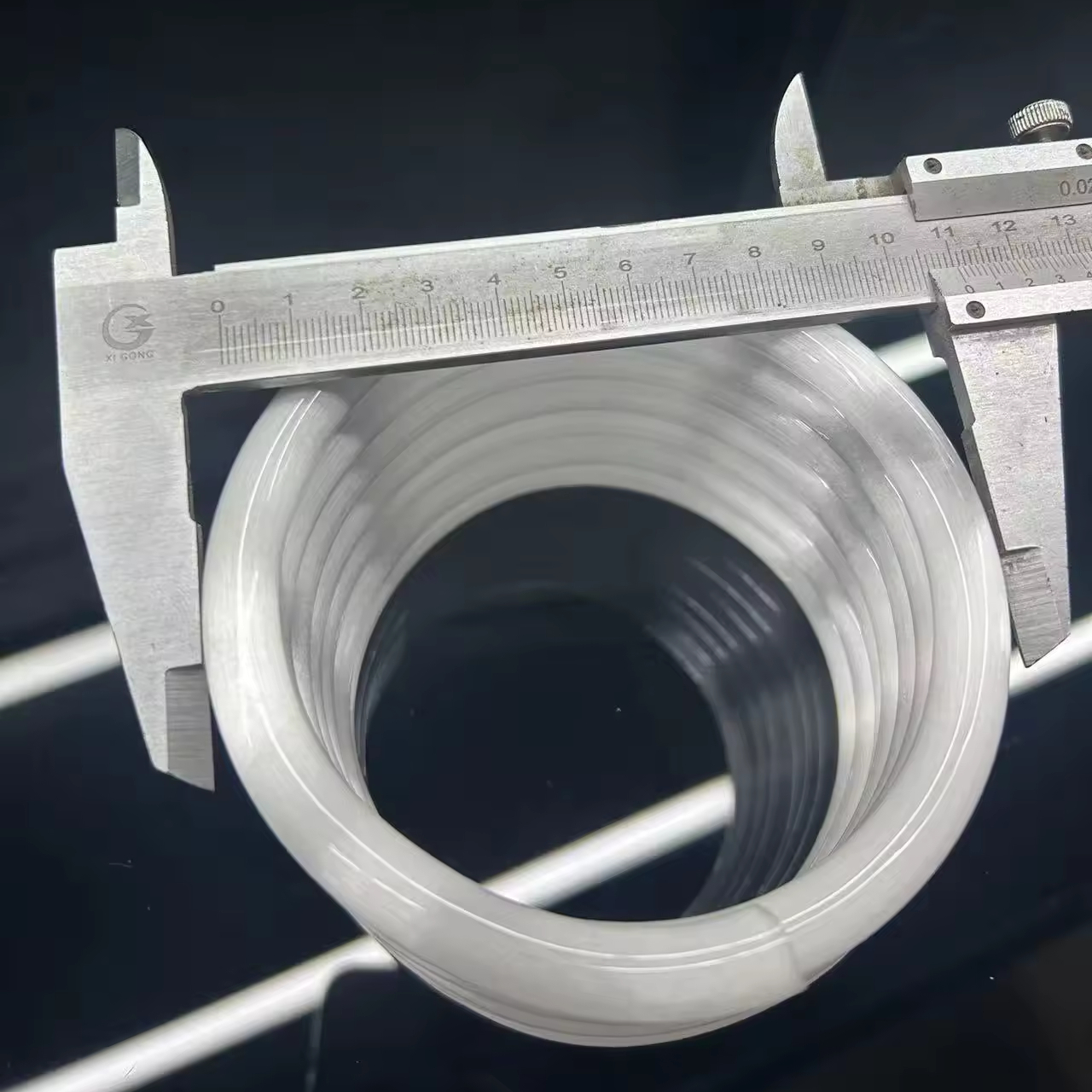
Helical Clear Quartz Glass Coil Tube
View Specifications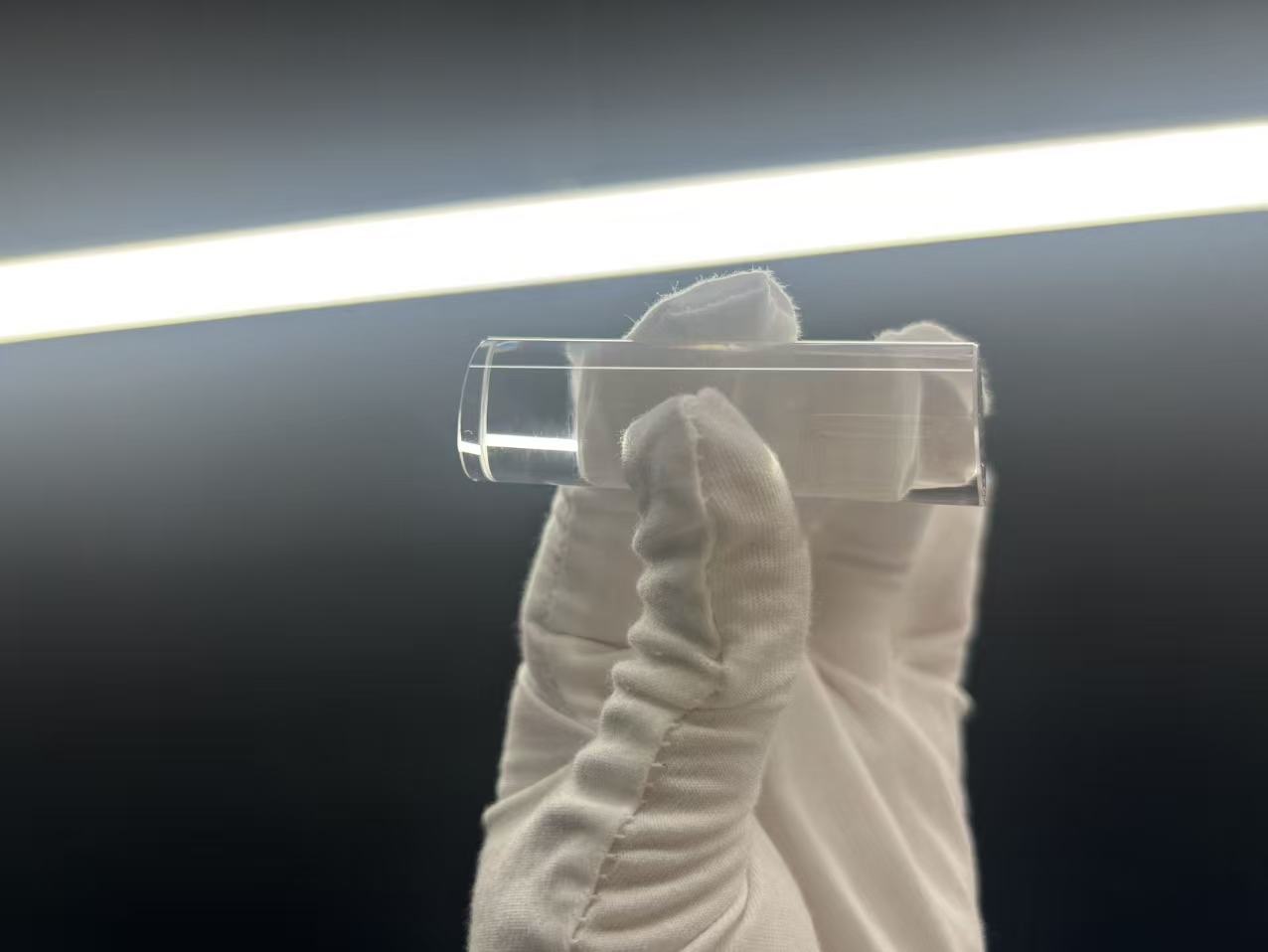
Round Head Quartz Rod
View SpecificationsEngineering Physics: Fused Quartz & Silica Substrates
A rigorous examination of synthetic optical amorphous silicon dioxide, crystalline matrix defects, laser-induced damage thresholds (LDT), and transmission dynamics across the electromagnetic spectrum.
Optical Grades: JGS1 vs. JGS2 vs. JGS3 Synthesis
Optical quartz windows differ fundamentally based on raw material source and synthesis thermodynamics. JGS1 (Synthetic Fused Silica) is synthesized via chemical vapor deposition (CVD) or vapor-phase axial oxidation of high-purity silicon tetrachloride (SiCl₄) in an oxygen-hydrogen flame. This results in an amorphous matrix practically devoid of metallic impurities (Fe, Al, Ti < 0.1 ppm), delivering zero absorption down to 185 nm. However, it incorporates high hydroxyl ion concentrations ([OH⁻] ≈ 800–1200 ppm), which induces distinct absorption bands at 1380 nm, 2200 nm, and 2730 nm.
JGS2 (Fused Natural Quartz) is manufactured by high-temperature electro-fusion of selected natural crystalline quartz sand under vacuum or inert atmosphere. It balances exceptional mechanical resilience with wide spectral transmission from 220 nm through 2500 nm, making it the most cost-effective solution for plasma sight glasses, industrial pyrometry viewports, and UV curing arrays.
JGS3 (Infrared Fused Quartz) undergoes specialized vacuum electric smelting and deflocculation processes to strip hydroxyl content down to [OH⁻] < 5 ppm. This eliminates the near-infrared absorption valleys, extending continuous transmissive efficiency up to 3500 nm (and operational up to 4200 nm in thin geometries), essential for IR thermal imaging and Nd:YAG laser lines.
Thermal Dynamics, Birefringence & Damage Threshold
The structural hallmark of fused silica is its remarkably low coefficient of thermal expansion (CTE = 5.5 × 10⁻⁷ /°C between 20°C and 320°C), which is nearly 1/20th that of soda-lime glass. This near-zero expansion allows an OEM optical quartz window to withstand instantaneous thermal shock, such as direct submersion from 1100°C into ambient chilled water, without micro-cracking or dimensional drift.
For high-power pulsed laser optics (such as those employed in Attica’s particle and plasma physics institutes), Laser Induced Damage Threshold (LDT) is governed by surface microroughness and subsurface lattice disruption caused by grinding abrasive embedment. Nivra Quartz employs sub-nanometer colloidal silica chemical mechanical polishing (CMP) to achieve surface microroughness Ra < 0.5 nm. This yields an un-coated pulsed LDT exceeding 15 J/cm² at 1064 nm (10 ns pulse, 20 Hz) and > 8 J/cm² at 355 nm triple-harmonic wavelengths.
Every substrate leaving our factory is inspected through crossed polarizers to confirm internal residual stress birefringence below 5 nm/cm, mitigating polarization distortion in interferometry and ellipsometry.
| Material Classification | Spectral Range (T ≥ 80%) | [OH⁻] Content | Index of Refraction ($n_d$, 587.6 nm) | Thermal Softening Point | Primary Industrial / R&D Suitability |
|---|---|---|---|---|---|
| JGS1 (Synthetic Silica) | 185 nm – 2100 nm | 800 – 1200 ppm | 1.4585 | 1680 °C | Excimer lasers, DUV spectroscopy, fluorescence microscopes |
| JGS2 (Optical Fused Quartz) | 220 nm – 2500 nm | 100 – 200 ppm | 1.4584 | 1683 °C | Industrial sight windows, furnace viewports, UV sterilization |
| JGS3 (Low-OH Fused Quartz) | 260 nm – 3500 nm | < 5 ppm | 1.4584 | 1685 °C | Mid-IR thermal pyrometry, CO₂ / Nd:YAG laser cavity optics |
| Sapphire Substrate (Al₂O₃) | 190 nm – 5000 nm | 0 ppm | 1.7680 | 2040 °C | Extreme wear, ultra-high hydrostatic pressure, aerospace radomes |
Localized Applications in Athens' High-Tech Ecosystem
Athens is rapidly emerging as a southern European hub for photonics, aerospace manufacturing, and quantum infrastructure. Here is how our OEM quartz components power operations across the Attica basin.
Advanced Laser & Spectroscopy Research
Institutes like NCSR "Demokritos" in Agia Paraskevi and the laser laboratories of the National Technical University of Athens (NTUA) require high-homogeneity JGS1 Brewster windows and non-fluorescing fused silica cuvettes. Our windows withstand multi-terawatt femtosecond laser pulses without self-focusing dielectric breakdown, maintaining strict wave-front error tolerances (λ/10) for high-harmonic generation (HHG) experiments.
Koropi & Aspropyrgos Industrial Optics
The manufacturing corridors of Koropi and Aspropyrgos host automated high-power fiber laser cutting, welding, and additive manufacturing facilities. Our custom optical quartz debris shields and JGS2 protective windows safeguard multi-kilowatt processing heads against molten spatter, caustic flux vapors, and intense back-reflections, preventing expensive collimator lens replacement.
Piraeus Marine Sensing & Subsea LiDAR
Piraeus is home to one of the world's dense maritime technical clusters. Marine engineering contractors and Hellenic Center for Marine Research (HCMR) developers deploy our optically polished fused quartz pressure windows on subsea ROVs, LiDAR bathymetry scanners, and shipboard exhaust-gas scrubbers. Fused quartz provides complete resistance to hypersaline galvanic corrosion and withstands up to 60 MPa hydrostatic pressure.
Aerospace & Defense EO/IR Systems
In proximity to the Hellenic Aerospace Industry (HAI) corridor and defense avionics contractors in Attica, our JGS3 and precision optical quartz windows are incorporated into electro-optical/infrared (EO/IR) targeting pods and UAV reconnaissance cameras. The substrates maintain precise mechanical alignment and optical clarity despite extreme altitude temperature deltas (-55°C to +85°C).
Semiconductor Metrology & Cleanrooms
Advanced electronics and MEMS research cleanrooms in the northern suburbs of Athens utilize our customized quartz wafer carriers, diffusion furnace process tubes, and photolithography masking plates. With transition metal contaminations below 0.1 ppm, our substrates eliminate cross-contamination hazards during high-temperature thermal oxidation cycles.
Greek Solar PV & Solar-Thermal R&D
Greece leads Southern Europe in solar irradiance utilization. Research teams in Attica testing next-generation concentrated photovoltaic (CPV) receivers and high-temperature molten salt thermal systems employ our heavy-wall quartz bell jars and clear polished quartz plates as thermal barriers that pass concentrated solar flux without solarization degradation.
Athens Optical Sourcing Trends: Direct OEM Advantage
Why Attica’s engineering procurement leads are shifting from multi-tier European catalog re-sellers to direct-from-factory OEM manufacturing models.
Mitigating Markups and EU Stock Depletion
Historically, procurement managers at Greek universities and aerospace firms procured optical windows through central European catalog distributors. This model introduced compound distributors' markups of 250% to 400% and lead times of 8 to 14 weeks when non-standard diameters, customized stepped edges, or special drill-holes were required.
By establishing a direct supply pipeline with Donghai County Nivra Quartz Products Co., Ltd., Athenian engineers obtain genuine factory-direct pricing, direct review by our senior optical fabrication engineers, and rapid dispatch via DHL/FedEx Express directly to Athens International Airport (ATH) in as fast as 5–7 business days. Custom prototypes transition from CAD sign-off to finished component delivery inside 3 weeks.
EU Regulatory Compliance & Traceability
Every shipment bound for Greek and European Union destinations conforms fully with EU RoHS Directive 2011/65/EU and REACH (EC No 1907/2006) standards. Our raw optical fused silica is certified free of hazardous SVHC substances.
Shipments include Certificate of Conformance (CoC), material melt lot certification, and spectrophotometer transmission scans confirming that your deep-UV JGS1 or low-OH JGS3 substrate matches the exact numerical transmission curve promised before fabrication. This comprehensive traceability satisfies the strict reporting obligations of Horizon Europe and Hellenic military procurement audits.
Why Athens Optoelectronics Teams Partner with Us
Combining the natural raw mineral superiority of Donghai County—the world’s fused quartz capital—with advanced CNC optical finishing and a dedicated international trade division.
Donghai Silicon Cluster
Situated in Jiangsu's quartz industrial cluster, we control raw high-purity silicon feedstock quality, maintaining SiO₂ content above 99.99% across production batches.
Full Fabrication Line
Internal multi-wire diamond slicing, CNC edging, ultrasonic hole-drilling, double-sided planetary lapping, flame polishing, and laser defect mapping.
Strict Quality Verification
100% optical aperture inspection using Zygo interferometry, surface roughness profilometry, and spectrophotometer verification prior to Class 100 packaging.
Global Export Record
Verified supplier on international platforms with over US$40,000+ in verified export contracts every half-year, holding a 5.0/5.0 buyer satisfaction score.
Frequently Asked Questions by Athenian Engineers
Addressing the technical, logistics, and customs queries raised by Hellenic research institutes, universities, and industrial automation purchasers.
Q1: How are fragile optical quartz windows packaged to avoid breakage en route to Athens?
Every polished optical window undergoes multi-stage ultrasonic degreasing, cleanroom nitrogen blow-off, and individual enclosure in lint-free lens tissue inside dust-free protective wafer boxes. These are shock-cushioned inside high-density expandable polyethylene (EPE) custom foam inserts and encased in heavy export cartons or heat-treated, fumigation-free plywood crates that easily survive intercontinental air cargo transit to Eleftherios Venizelos Airport (ATH).
Q2: What are the EU customs tariff (HS Code) specifications for importing optical quartz into Greece?
Most flat optical quartz windows, polished discs, and fused silica substrates are classified under HS Code 7006.00.90 (Glass of heading 7002, 7003, 7004 or 7005, bent, edge-worked, engraved, drilled, enamelled or otherwise worked) or HS Code 7002.31.00 (Tubes of fused quartz or other fused silica). We supply fully completed commercial invoices, packing lists, and Origin Certificates with appropriate TARIC codes to ensure swift Hellenic Customs clearance.
Q3: Can you fabricate non-circular quartz windows with custom chamfers and bevels?
Yes. Our precision 5-axis CNC machining centers produce custom rectangular viewports, elliptical windows, stepped flange profiles, internal and external bevels, and countersunk mounting holes according to your CAD drawings (.STEP, .DWG, or .PDF). Edge chips are minimized through diamond grinding, and edges can be delivered ground or fire-polished according to your thermal stress specifications.
Q4: What surface quality (Scratch-Dig) tolerances do you guarantee for laser-grade windows?
For standard industrial sight glasses, we maintain MIL-PRF-13830B 60-40 scratch-dig. For precision laser cavities, fluorescence imaging, and academic photonics systems in Athens, we provide optical finishes of 20-10 or 10-5 Scratch-Dig, with surface flatness to λ/10 per 25 mm clear aperture and parallelism < 10 arcseconds, documented by batch interferometric inspection reports.
Q5: Do you offer anti-reflective (AR) and optical thin-film coatings on your quartz windows?
Yes. We apply physical vapor deposition (PVD) electron-beam thin-film coatings, including Broadband Anti-Reflective (BBAR) coatings for the Ultraviolet (248–400 nm), Visible (400–700 nm), Near-Infrared (700–1100 nm), and telecom wavelengths (1310/1550 nm), as well as V-coatings for specific laser lines like 355 nm, 532 nm, and 1064 nm, achieving surface reflection losses under 0.2% per surface.
Q6: What is the standard minimum order quantity (MOQ) and production turnaround?
For research prototypes and custom pilot builds, our MOQ is as low as 1 to 5 pieces. Standard catalog dimensions or optical discs under 100 mm diameter are typically manufactured and dispatched within 7–12 working days. Prototype custom geometries typically require 14–18 working days from complete engineering drawing sign-off.
Request an Engineering Review & Quotation for Athens Delivery
Send us your part drawings, required substrate grade (JGS1, JGS2, JGS3, or Sapphire), dimensional tolerances, and coating requirements. Our optical engineering team provides technical feedback and commercial quotations within 5 hours.