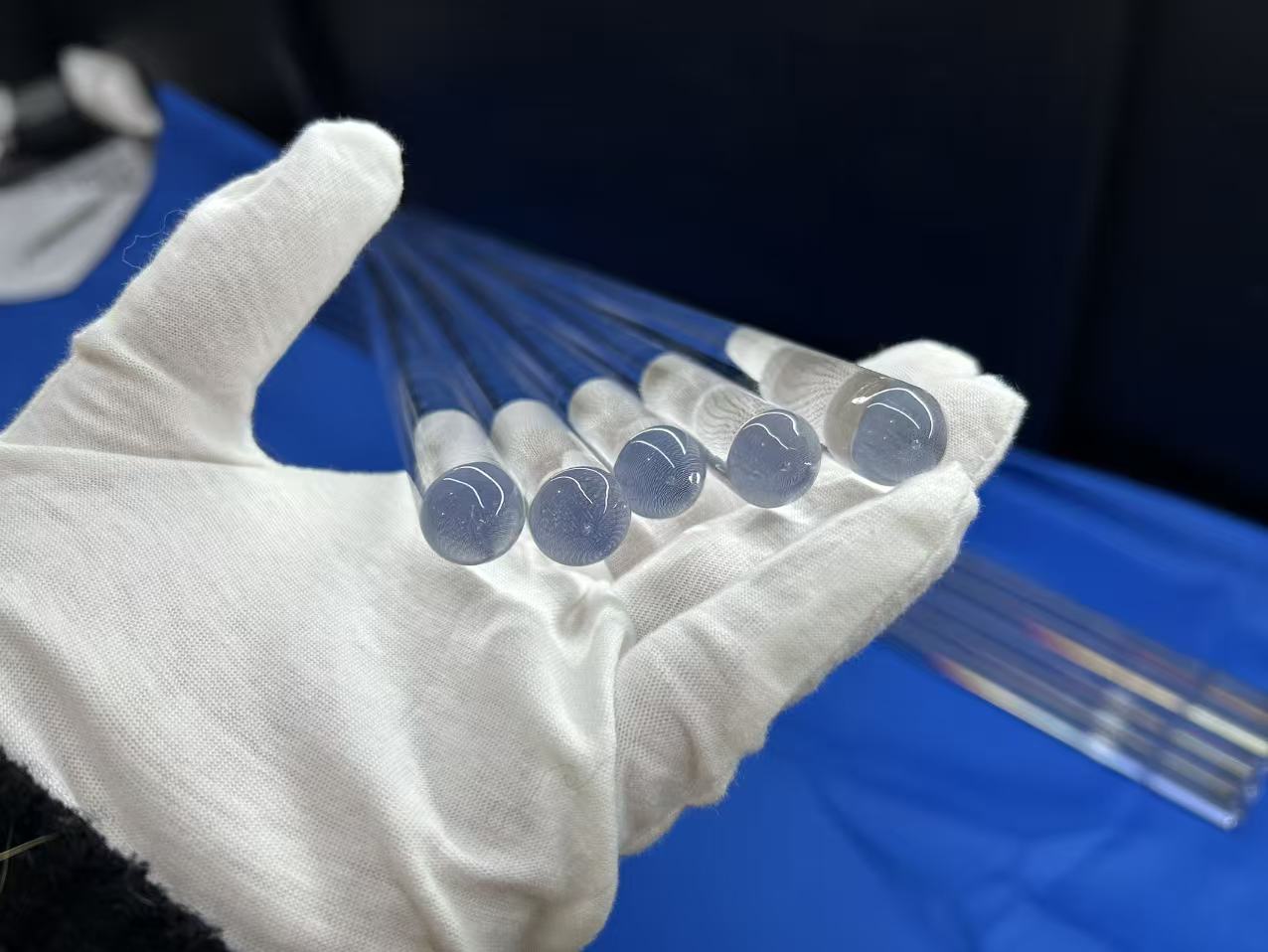
High-Purity Fused Quartz Round Rods (Cutting, Welding & Bending)
Annealed clear silica rods for structural condenser supports, stirring drives, and optical light guides.
Explore our primary manufacturing outputs from Donghai County Nivra Quartz Products Co., Ltd. Every product is calibrated for extreme thermal resilience, optical purity, and acid corrosion resistance.
Annealed clear silica rods for structural condenser supports, stirring drives, and optical light guides.
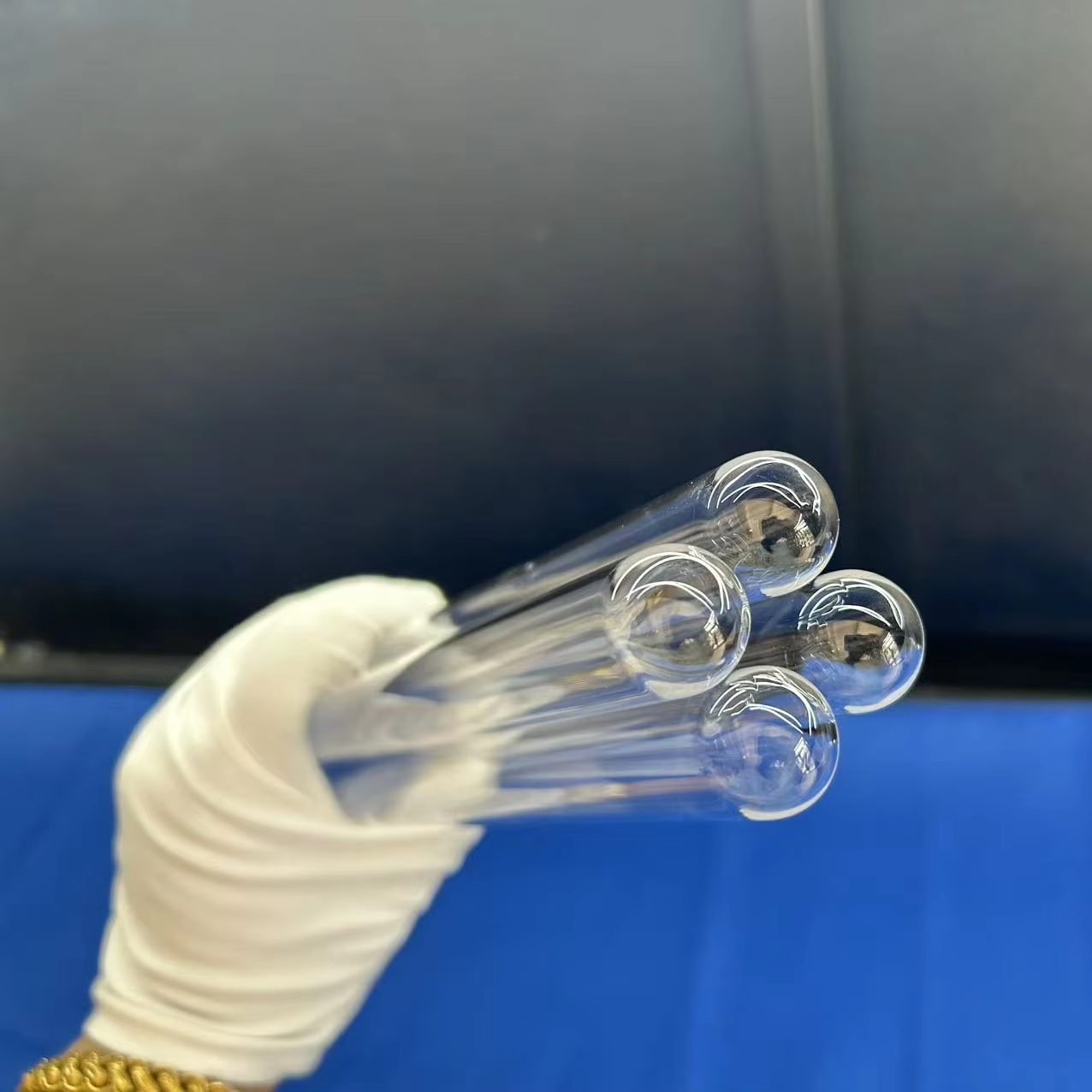
High-temp test receivers, condensation catch vessels, and vacuum deposition chamber liners.
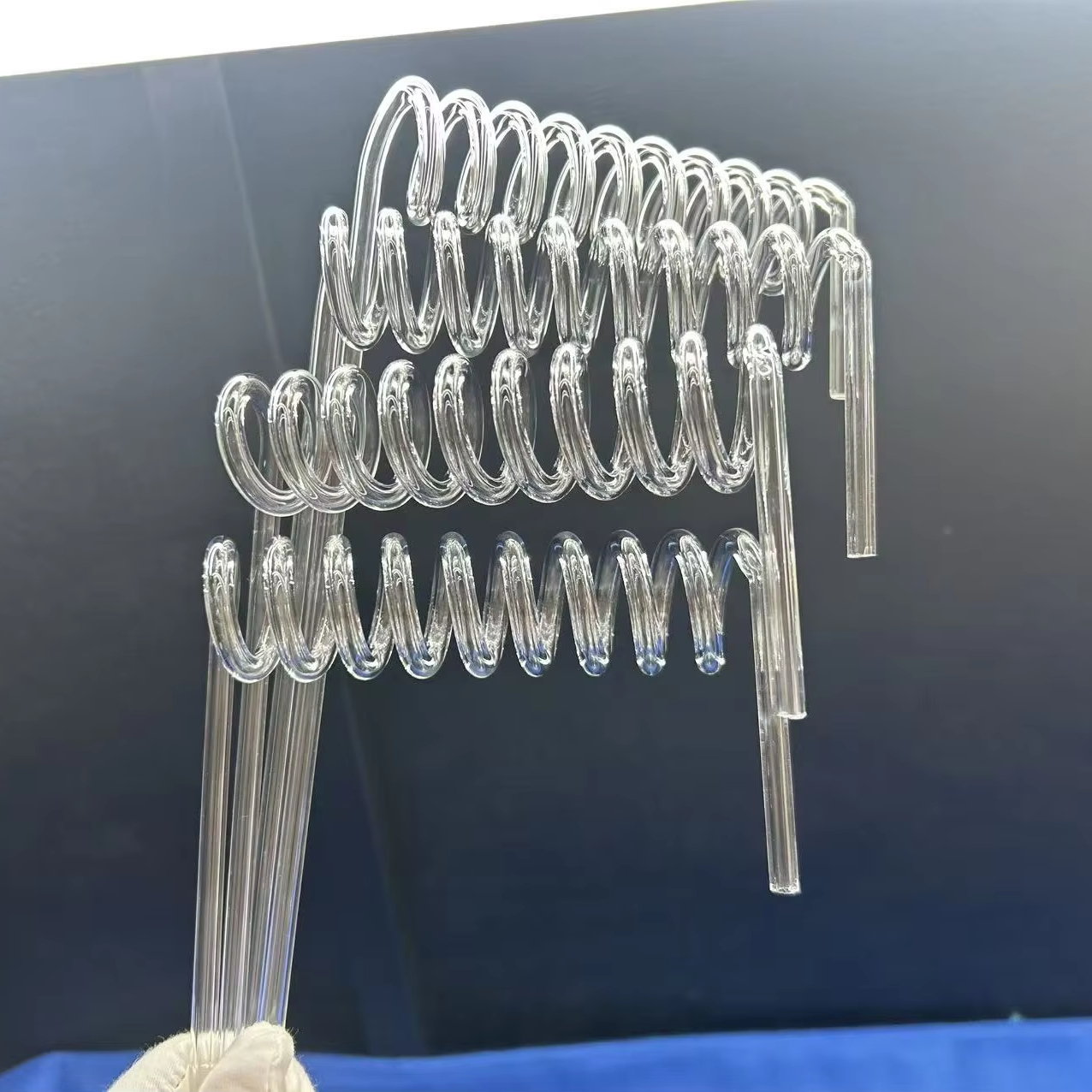
Precision-pitch spiral coils delivering expanded surface heat transfer in compact reflux columns.
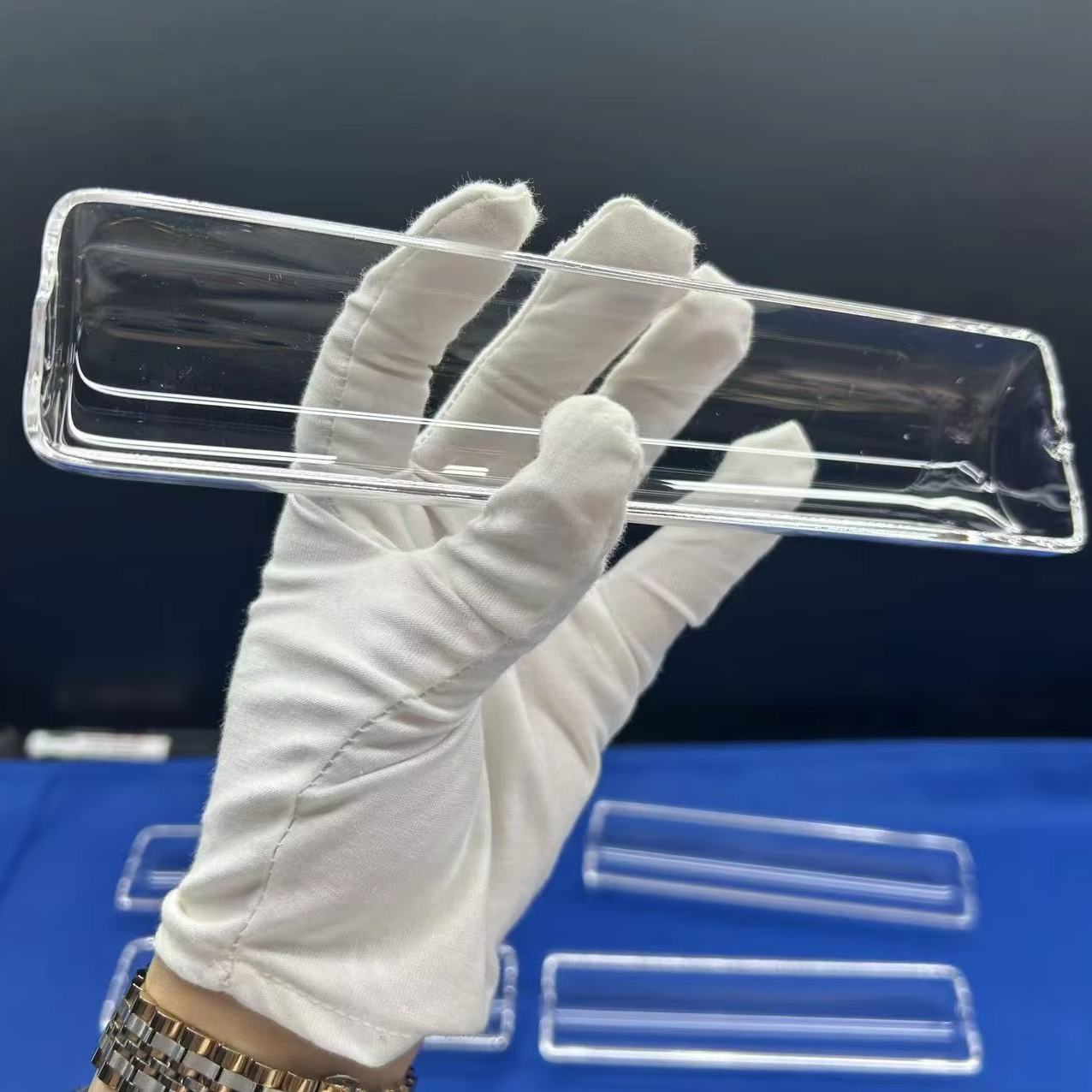
Micro-slotted quartz carriers engineered for wafer chemical etching, diffusion furnace, and CVD lines.
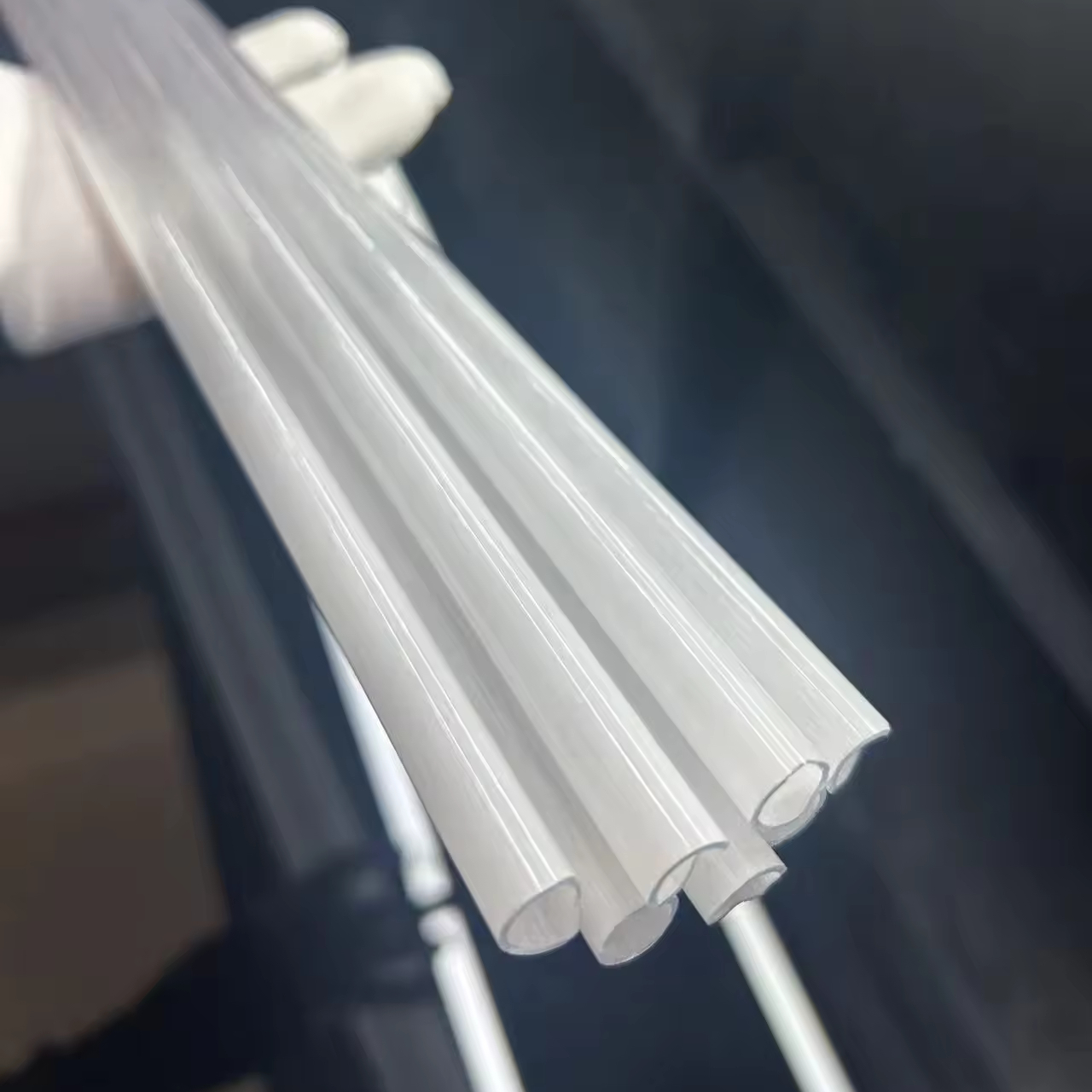
Uniform micro-bubble matrix providing high infrared thermal scatter and outer condensation insulation.
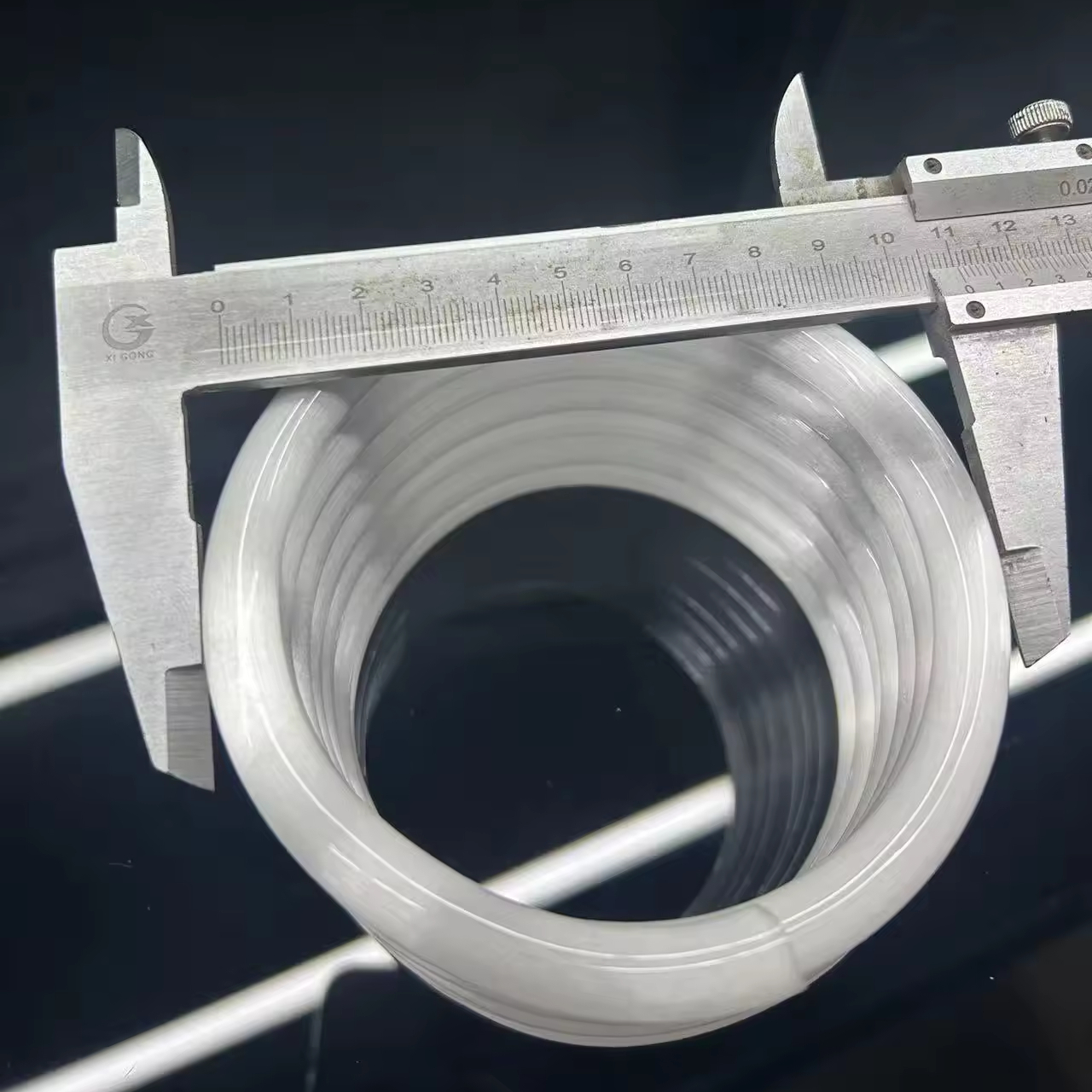
Continuous multi-turn helical inner condenser coil for acid distillation and aggressive gas extraction.
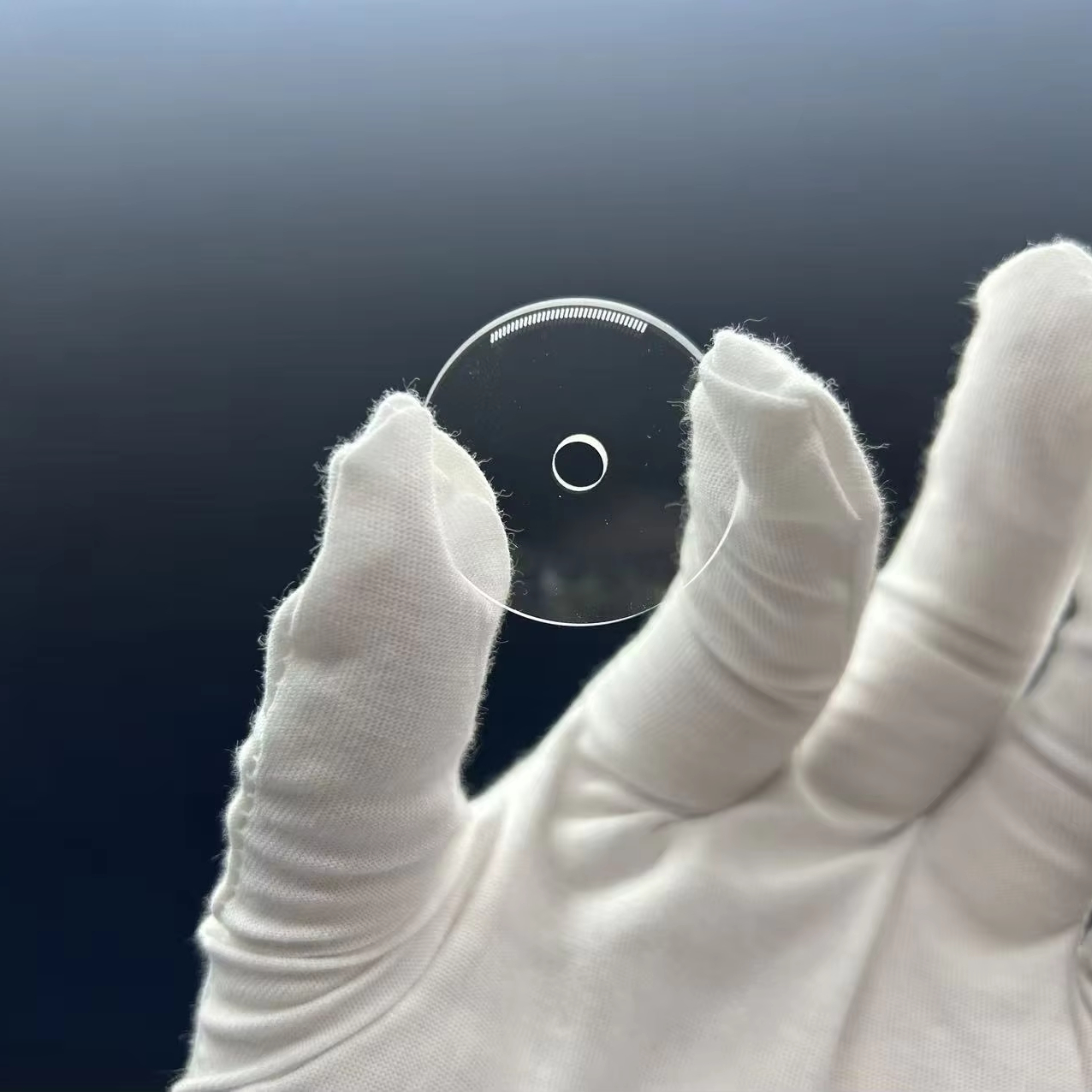
Uniform sandblasted finish serving as condenser fractionation trays, light diffusers, and thermal shields.
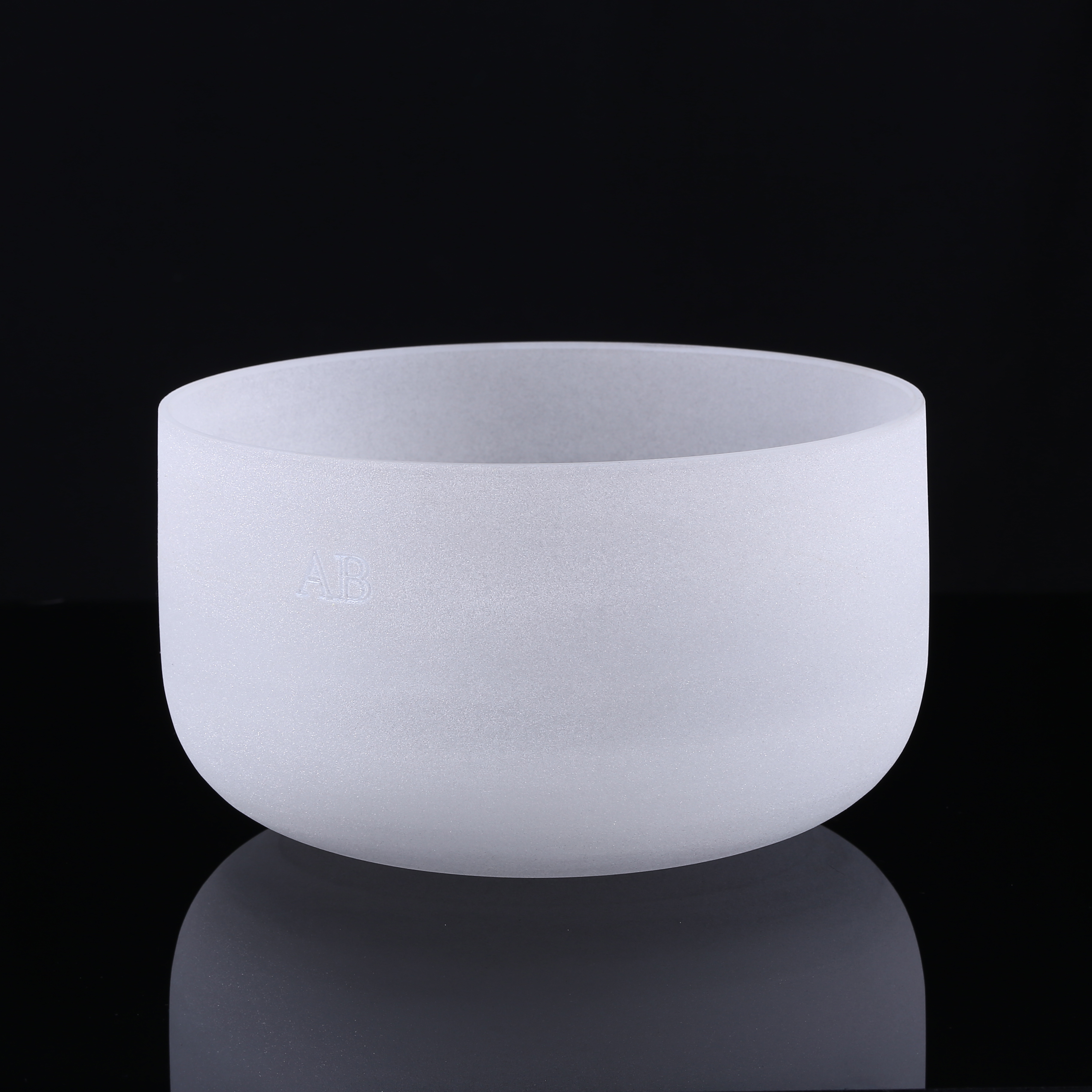
Crucibles designed for high-purity rare earth refining, solar polysilicon ingot casting, and chemical synthesis.
Understanding the thermodynamics, crystallographic stability, and vapor-phase chemical resistance of fused silica ($SiO_2$) for process engineers and procurement directors.
In rigorous chemical vapor distillation, semiconductor precursor refining (e.g., trichlorosilane, silicon tetrachloride), and ultra-pure pharmaceutical distillation, standard laboratory borosilicate glass (Pyrex / Duran 3.3) consistently fails under combined thermal cycle stress and corrosive vapor condensation. Industrial-grade quartz condenser tubes fabricated from high-purity natural crystal or synthetic fused silica provide the definitive solution.
| Performance Metric | High-Purity Fused Quartz (Donghai Nivra) | Borosilicate Glass 3.3 | Fluoropolymer (PTFE / PFA) | Hastelloy C-276 |
|---|---|---|---|---|
| Continuous Operating Temp | 1,100 °C (1,373 K) | 230 °C (503 K) | 200 °C (473 K) | 650 °C (923 K) |
| Peak Short-Term Threshold | 1,450 °C (Softening point 1,683 °C) | 500 °C (Softening point 820 °C) | 260 °C | 1,000 °C |
| Thermal Expansion (CTE) | 5.5 × 10⁻⁷ / °C (Near-Zero) | 33 × 10⁻⁷ / °C | 1000 × 10⁻⁷ / °C | 112 × 10⁻⁷ / °C |
| Thermal Shock Resilience (ΔT) | Exceeds 1,000 °C (Quenchable in ice water) | 150 °C to 180 °C | N/A (Softens) | Subject to thermal warpage |
| UV-Vis-IR Optical Bandwidth | 185 nm – 3,500 nm (Deep UV to Mid-IR) | 310 nm – 2,200 nm | Opaque / Milky | Non-transparent |
| Acid Corrosion Resistance | Immune to all hot acids (except HF & >150°C H₃PO₄) | Vulnerable to strong alkaline leach | High chemical resistance | Attacked by wet chlorine & nitric mixes |
| Metal Leaching / Ionic Purity | < 15 ppm Total Impurities (ICP-MS) | High Sodium/Boron leaching risk | Trace carbon/fluorine outgassing | Heavy metal ion contamination (Ni, Mo) |
With a coefficient of thermal expansion of merely 5.5 × 10⁻⁷ / °C, quartz condenser tubes withstand cold coolant inrush during violent exothermic flash distillation without micro-fracturing or wall collapse.
In ultra-trace analytical synthesis and semiconductor CVD exhaust scrubbers, our fused quartz prevents ionic contamination. Alkali metal contents (Na, K, Li) are locked below 1.5 ppm combined.
Equipped with synthetic JGS1 and JGS2 optical quartz jackets, these condenser columns permit real-time UV photochemical activation (such as radical halogenation) directly through the coolant mantle.
From custom glass lathe coil winding to ultrasonic CNC drilling, we fabricate condenser columns suited to custom heat-exchange envelopes.
Features a high-surface-area helical spiral inner tube nested inside an outer water jacket. Best suited for volatile solvent vapor recovery, low-boiling organosilicon streams, and vacuum solvent stripping.
Straight-through center tube designed for continuous high-throughput downward distillation. Eliminates vapor hold-up and facilitates effortless decontamination when running corrosive sulfuric or hydrochloric vapors.
Engineered with progressive spherical expansion bulbs along the vapor core to maximize vapor turbulence and contact surface area. Standard choice for aggressive Soxhlet extraction and reflux distillation systems.
Coolant circulates through an internal double-wound quartz coil while process vapors flow in the outer jacket. Provides exceptional condensation velocity for boiling precursors up to 350 °C.
Macro-economic shifts, raw material concentration in China's quartz capital, and evolving clean energy demand vectors reshaping quartzware procurement.
Global buyers are migrating away from fragmented middle-tier trading houses directly toward integrated Donghai County factories. Concentrating refining, tube drawing, hot flame bending, and CNC joint grinding in one locale cuts lead times by 35% and eradicates cross-transit handling fractures.
The proliferation of next-generation SiC epitaxial growth, perovskite tandem solar cell CVD coating, and high-temperature solid oxide electrolyzer (SOEC) hydrogen testing requires quartz condenser assemblies with sub-millimeter tolerances and zero hydroxyl (OH < 2 ppm) content to eliminate thermal de-vitrification.
While manual torch working remains essential for complex scientific glassware, Donghai Nivra Quartz integrates multi-axis synchronized CNC glassworking lathes. This maintains inner coil wall concentricity within ±0.04 mm, preventing localized vapor pressure hotspots during vacuum reflux operations.
Headquartered at 285 Heping East Road, Lianyungang, Jiangsu, Nivra Quartz operates as a premier Chinese manufacturer and trading powerhouse with a dedicated workforce of 101–200 skilled specialists. Certified on-site by international inspection agencies via Alibaba.com, we produce custom precision fused quartz glass tubes, plates, crucibles, wafer boats, and condenser heat exchangers.
Our factory enforces strict end-to-end quality governance: raw crystal sorting, vacuum induction electric fusion, automated cutting, precision CNC edge grinding, hydrogen-oxygen flame shaping, high-temperature annealing at 1,140 °C (eliminating all residual mechanical stress), and final spectrophotometric optical verification.

Direct engineering answers to resolve common doubts regarding tolerances, joint fittings, hydroxyl absorption, packing safety, and minimum order requirements.
For standard extruded and flame-polished outer jackets (OD 20 mm to 80 mm), we routinely hold outer diameter tolerances within ±0.15 mm to ±0.25 mm. For precision internal coiled condenser spirals and ground standard taper joints (e.g., 14/23, 19/26, 24/29, 24/40, 29/32, 45/50), our CNC centerless grinding achieve mating surface dimensional tolerances within ±0.01 mm to ±0.03 mm. Total indicator runout (TIR) for full assemblies is controlled below 0.3% of total length.
Selection depends directly on the photochemical transmission and operating temperature envelope:
Yes. Because direct fusing of fused quartz to borosilicate is impossible due to radical thermal expansion mismatch (5.5 × 10⁻⁷ vs 33 × 10⁻⁷ / °C), we engineer two solutions: (1) Precision-ground standard taper quartz joints (14/20, 24/40, etc.) clamped with PTFE sleeves, or (2) Quartz-to-metal Kovar transition flanges and ISO-KF/NW vacuum flanges featuring chemical-resistant fluoropolymer O-rings.
Fragile quartz spiral condensers require engineered packaging. Each piece undergoes high-pressure ultrasonic washing, is vacuum-sealed in anti-static poly film, and is encapsulated within custom CNC-milled high-density EPE shock-dampening foam cavities. Long tubes and large condenser columns are packed into export-grade, fumigation-free plywood crates reinforced with inner torsional steel corner braces.
To support corporate R&D centers, pilot testing, and plant maintenance turnarounds, our MOQ on custom quartz spiral condensers, coiled tubes, and bottom-sealing tubes starts at just 1 to 2 pieces. Batch production pricing discounts take effect at 10, 50, and 100+ unit quantities.
Following high-temperature torch welding and spiral bending, quartz condensers develop significant internal hoop stresses. All our finished components are processed through an electric annealing lehr at 1,140 °C for a minimum soak of 60 minutes, followed by a controlled ramped cooldown to the strain point (1,070 °C). Stress birefringence is verified using polariscopes before clearance.
Fused silica exhibits virtually total chemical inertness to almost all organic and inorganic acids (including nitric, aqua regia, boiling hydrochloric, and sulfuric acids). The only substances that actively etch or corrode fused quartz are Hydrofluoric Acid (HF) at any temperature, Phosphoric Acid ($H_3PO_4$) above 150 °C, and concentrated caustic alkali solutions (NaOH, KOH) at elevated temperatures.
To expedite your engineering evaluation and obtain formal quote drawings within 5 business hours, please prepare the following operational parameters.
- Jacket Outer Diameter (OD) & Wall Thickness
- Effective Jacket Cooling Length (mm)
- Inner Coil Outer Diameter & Pitch Spacing
- Ground Joint Sizes (e.g., Male 24/40 bottom, Female 24/40 top)
- Coolant Hose Barb Dimensions (OD 8mm, 10mm, 12mm)
- Distillate Vapor Identity & Concentration
- Peak Operating Temperature & Reflux Velocity
- Coolant Media (Chilled water, glycol, liquid nitrogen)
- Working Pressure (High vacuum mbar or positive bar)
- Required Silica Grade (Commercial, JGS1, JGS2, JGS3)
- Target Delivery Timeline & Shipping Mode (Air/Sea)
- Production Run Volume (Initial Prototype vs Mass Production)
- Custom Silk-Screened Calibration Markings or Serialization
- Material Purity Certificate (ICP-MS) Requirements
- Third-Party Factory Inspection Acceptance
Send us your technical CAD drawings, sketches, or custom dimensional parameters. Our specialized quartz engineers in Donghai County will review manufacturability, verify thermal tolerances, and deliver a competitive factory-direct quote.