Choosing the 2026 best Semiconductor Quartz Boat for wafer processing starts with the actual furnace, wafer size, and production conditions. There is no single design that fits every line. A boat must support wafers securely while allowing consistent spacing and process-gas flow. Slot pitch, boat dimensions, quartz grade, and surface finish all matter. Small differences can affect loading, handling, and repeatability.
In practice, review the full thermal cycle, not just the stated maximum temperature. Repeated heating and cooling can expose weaknesses in material quality or workmanship. Check that dimensions match the furnace tube and wafer specification, and ask suppliers for traceable material and inspection information. These details help teams compare options with evidence rather than relying on broad claims. Look closely.
The best choice also depends on cleaning procedures, expected service life, and how often boats are handled. Inspect edges and slots for chips, rough areas, or uneven spacing before use. Even a carefully made boat needs routine checks. A polished specification sheet may not reveal how a product performs in your process, so trial evaluation can be worthwhile. That takes time. Yet it may prevent avoidable handling issues and inconsistent results. This guide explains the key selection criteria, practical trade-offs, and questions to ask suppliers when comparing Semiconductor Quartz Boat options for wafer processing in 2026.
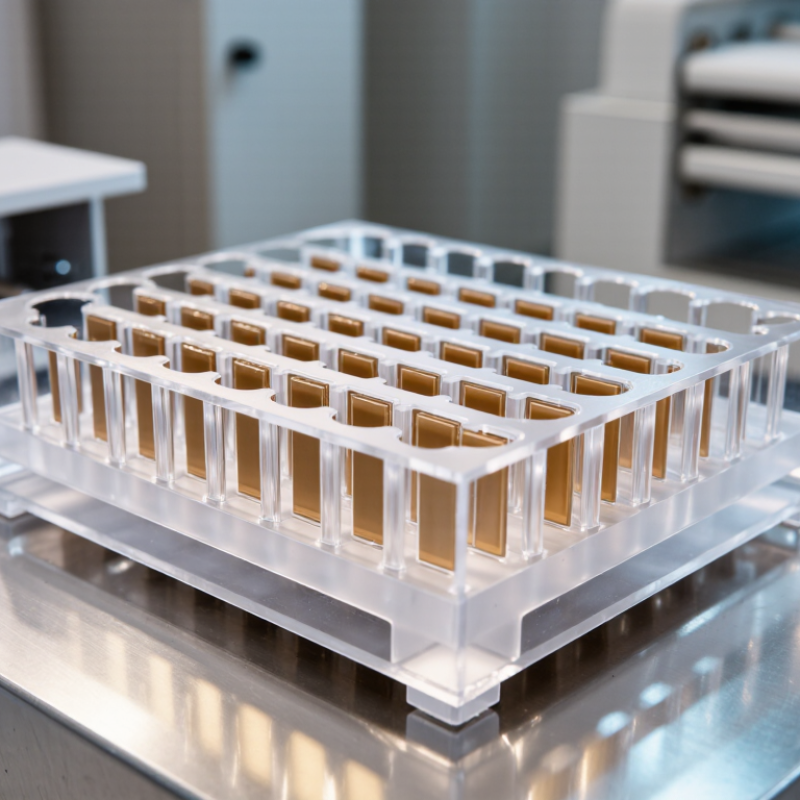
A semiconductor quartz boat is a high-purity fused-silica carrier that holds wafers during batch processing, including diffusion and oxidation. Its slots keep wafers separated and upright as they move through a hot furnace. That spacing helps gases and heat reach wafer surfaces more consistently, while reducing contact between delicate edges. The boat is not just a rack. Slot pitch, wafer diameter, surface finish, and thermal history all affect its suitability. A mismatch can cause wafer movement, uneven exposure, or particle concerns.
SEMI’s 300mm Fab Outlook to 2027 projected global 300mm fab capacity would reach 9.6 million wafers per month in 2027. That scale makes repeatable handling important, but capacity figures do not guarantee a particular boat design will suit every process. Inspect for chips, deposits, and distortion, and follow the fab’s cleaning and replacement criteria. A common oversight is treating quartz as maintenance-free. It is durable, not invulnerable.
Tips: Confirm wafer size and slot spacing before loading. Use clean gloves and approved handling tools; a tiny edge chip can matter. Record boat use cycles and inspection findings. If breakage or particle counts rise, review the process conditions too—not only the carrier. One detail is easy to miss: cleaning can change surface condition over time.
For 2026 wafer processing, a quartz boat’s grade should match its furnace temperature, chemistry, and cleanliness requirements. Semiconductor-grade fused quartz is selected for low metallic contamination and stable thermal behavior. Grade names are not always comparable across suppliers, so request measured impurity levels, hydroxyl content, and limits for bubbles or inclusions. Small defects matter.
Manufacturing may involve machining fused-quartz stock, forming components, and fusion-joining them with controlled heat. Annealing helps reduce residual stress, while careful cleaning removes particles before use. Inspect the finished boat for smooth contact surfaces, consistent slot dimensions, and cracks near joints. A polished appearance alone proves little.
Design details affect wafer handling and process consistency. Slot pitch must hold wafers upright without crowding; rounded edges help avoid chipping during loading. The support geometry should allow uniform gas flow and limit contact marks. Check compatibility with the furnace tube, loading hardware, and expected thermal cycle. Even a well-made boat can behave differently under steep temperature gradients, so trial runs and inspection after cycling remain useful. That part is easy to underestimate.
2026 Best Semiconductor Quartz Boat for Wafer Processing?
Key Criteria for Selecting a Quartz Boat for 2026 Wafer Processes
For 2026 wafer processes, choosing a quartz boat starts with the thermal and chemical demands of the recipe. Review the stated purity, temperature rating, and resistance to repeated heating and cooling. Trace impurity limits to process requirements, rather than treating “high purity” as a complete specification. Small details matter. Check slot pitch, wafer spacing, and support geometry against the actual wafer size and furnace airflow. A slight mismatch can cause uneven loading or contact marks.
Surface finish and edge quality deserve inspection under consistent lighting. Look for chips, scratches, residue, or uneven contact points before use. Ask for dimensional records, material certificates, and lot traceability, then qualify samples under representative process cycles. A clean appearance is reassuring, but it does not prove stable performance. Measurements and repeatable results matter more.
Tips: Keep an incoming-inspection log with boat identification, dimensions, visible defects, and cycle count. Compare boats after cleaning and thermal cycling, not only when new. If results vary, investigate handling, furnace position, and recipe conditions before changing several variables at once. That discipline may feel slow. It can help catch a small mismatch before it affects wafer consistency.
Selecting a semiconductor quartz boat starts with furnace geometry, not a catalog photo. A horizontal tube typically needs a long, evenly supported carrier, while a vertical furnace uses a compact design that keeps wafers aligned during loading. Slot count and pitch should match wafer diameter, robot access, and the process recipe. Tighter spacing increases capacity but may restrict gas flow and affect temperature uniformity.
Small detail.
Check the usable hot zone, not just the furnace’s nominal tube size.
Wafer diameter changes the boat’s width, slot profile, and handling clearance. A carrier made for one wafer size is not automatically suitable for another; even small alignment differences can lead to contact or uneven spacing. Quartz purity and surface finish matter too, since residue or rough contact points can affect wafer cleanliness. Inspect the end slots and support points for chips after thermal cycling.
Fit matters.
In practice, compare the boat with the actual loading hardware and process conditions. A specification sheet may miss awkward handling or limited clearance.
Not always obvious. Keep those checks in the evaluation.
2026 Best Semiconductor Quartz Boat for Wafer Processing?
Cleaning, Inspection, and Service Life in Semiconductor Production
A quartz boat can look clean and still carry process residue. Deposits may collect around wafer slots and contact points, where ordinary room lighting misses them. Cleaning should follow a validated procedure for the specific process, including approved chemistry, thorough rinsing, and controlled drying. Small details matter. Handling with clean gloves and dedicated tools helps prevent fresh contamination after cleaning.
Inspection works best under consistent lighting, with magnification when needed. Look for chips, hairline cracks, cloudy areas, and changes in slot edges. These details can affect wafer support or signal wear. Record findings alongside cleaning dates and process use. A checklist helps, though it cannot catch every subtle change. Not always.
There is no single service-life number that fits every production line. Thermal cycles, process chemistry, handling, and cleaning frequency all influence wear. Compare inspection records over time, and remove a boat from service when damage or recurring residue raises a credible risk. Requalify replacement boats before production use. The judgment can be imperfect; document the reason for each decision, so future checks have useful context.
It holds wafers upright and separated during batch furnace processes. Its slots help heat and gases reach wafer surfaces more consistently.
The boat must match the wafer diameter and required slot pitch. Poor fit can allow movement, uneven exposure, or edge contact.
Match the grade to furnace temperature, process chemistry, and cleanliness needs. Ask for measured impurity levels, hydroxyl content, and defect limits. Small defects matter.
Check smooth contact surfaces, rounded slot edges, and consistent dimensions. Confirm compatibility with the furnace tube, loading hardware, and thermal cycle.
Follow a validated procedure for the specific process, including approved chemistry, thorough rinsing, and controlled drying. Use clean gloves and dedicated tools afterward.
Check slots and joints for chips, hairline cracks, cloudy areas, deposits, and distortion. Use consistent lighting and magnification when needed. Not always easy.
There is no fixed service-life number. Thermal cycles, chemistry, handling, and cleaning frequency all affect wear.
Consider removal if damage or recurring residue creates a credible risk. Record the reason and requalify a replacement before production use. Judgment can be imperfect.
A Semiconductor Quartz Boat is a precision carrier that holds and spaces wafers during high-temperature processing. Its quartz grade, purity, manufacturing method, and surface finish influence thermal performance, contamination control, and mechanical reliability. Design details such as slot spacing, wafer capacity, dimensions, and support geometry should match the process requirements and furnace environment.
Choosing the right boat for 2026 wafer processes involves balancing wafer size, temperature conditions, loading needs, and compatibility with the production line. Different boat configurations suit different furnace types and wafer formats, so selection should account for process consistency and handling requirements. Regular cleaning and inspection can help identify residue, surface damage, or wear before they affect performance. With appropriate maintenance and replacement planning, a quartz boat can support reliable wafer processing throughout its service life.